

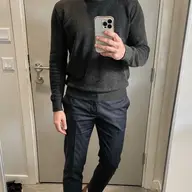
What business casual actually means
Business casual is office clothing that's dressier than everyday wear but stops short of a suit and tie: tailored pants, chinos or a skirt with a collared shirt, a blouse or a fine knit, plus polished shoes. A blazer is optional. Athletic wear and anything ripped are out, and so are jeans by the classic definition.
It's a range rather than one outfit. At the dressy end, it's one step below a suit: a blazer that isn't part of a suit, a pressed shirt and leather shoes. At the relaxed end, it's smart casual with no jeans: chinos, a plain T-shirt under a blazer and clean leather sneakers. Below you'll find a five-step scale (a practical way to map the range, not an official standard) with an example outfit for each step, how the term shifts in the US, the UK and Germany, what doesn't count, and eight pieces that cover every step.
The business casual scale, in five steps
Business casual isn't one outfit. It's a scale, and every office picks its own spot on it. The five steps below run from the dressiest version to the most relaxed. Find the step your workplace sits at and dress to it, or one step up on a day with clients.
| Step | What it looks like | An example outfit |
|---|---|---|
| 1. One step below a suit | A blazer or sport coat that isn't part of a suit, a collared shirt or blouse, tailored pants or a skirt, and leather shoes. A tie is optional. | A navy blazer over a light blue shirt, gray wool pants and brown leather loafers |
| 2. Tailored, jacket optional | The same shirts, blouses and tailored pants or skirts, with the blazer saved for meetings. A cardigan or fine knit often stands in for the jacket. | A white blouse tucked into a navy pencil skirt, a gray cardigan and low block heels |
| 3. Classic business casual | Chinos or tailored pants with a button-down shirt, a blouse or a fine-knit sweater, and loafers, derbies or flats. | Khaki chinos, a white oxford shirt under a gray merino sweater, and suede loafers |
| 4. Relaxed business casual | Knit polos, simple knit tops and relaxed jersey or knit dresses join in, and clean leather sneakers often pass. | A navy jersey midi dress with a light cardigan and ballet flats |
| 5. Smart casual, no jeans | The relaxed end: a plain T-shirt under a blazer, overshirt or cardigan, chinos, and clean sneakers. Jeans stay out, and that's what keeps it business casual. | A plain white T-shirt under an unstructured navy blazer, gray chinos and white leather sneakers |
Business casual by industry and country
Where you work shapes the code as much as the country. Finance and law tend to sit at the dressy end (steps 1-2), especially with clients. Tech tends to sit at the relaxed end or below it, where jeans are often fine, and creative fields vary widely. Most other offices land somewhere in the middle, and it varies by company, sometimes even by team.
Country matters too: the phrase travels, but its meaning shifts. The table shows general tendencies, not rules: every company draws its own line.
| Country | What it often means | Worth knowing |
|---|---|---|
| United States | Chinos or tailored pants with a button-down shirt, a blouse, a fine knit or a knit polo. A blazer is optional in many offices. | The phrase covers the whole scale, so its meaning varies by company. Client meetings often sit a step dressier than an ordinary office day. |
| United Kingdom | Often called smart casual instead. Tends to mean tailored pants or chinos with a shirt, blouse or knit, and a blazer on client-facing days. | In British English, "smart" means well dressed, so read smart casual as polished first and casual second. |
| Germany | The English term is used as is. Tends to mean a shirt or blouse without a tie, chinos, tailored pants or a skirt, and a blazer as an option. | Some offices accept dark, plain jeans with a blazer and still call it business casual; others don't. It varies by company. |
The best yardstick: what your colleagues wear on an ordinary day, not on a client day or a Friday. Notice it on your interview day or in your first week, then dress at that step or one above it.
What isn't business casual
The first six items below are out at every step of the scale. If one of them is fine at your office, the code there is more relaxed than business casual, whatever it's called. The last one goes the other way: it's more formal than business casual.
- Jeans, by the classic definition. Offices that allow them are usually running something closer to smart casual, even if they call it business casual.
- Athletic wear: leggings worn as pants, joggers, hoodies, track jackets and running shoes.
- T-shirts with graphics, slogans or big logos, and thin-strap tank tops.
- Shorts, flip-flops and beach sandals.
- Anything ripped, faded, stained, wrinkled or see-through.
- Very short skirts and dresses, crop tops and low necklines.
- A full suit and tie. It isn't wrong, but it's business professional: a step above what was asked.
Eight pieces that cover the whole scale
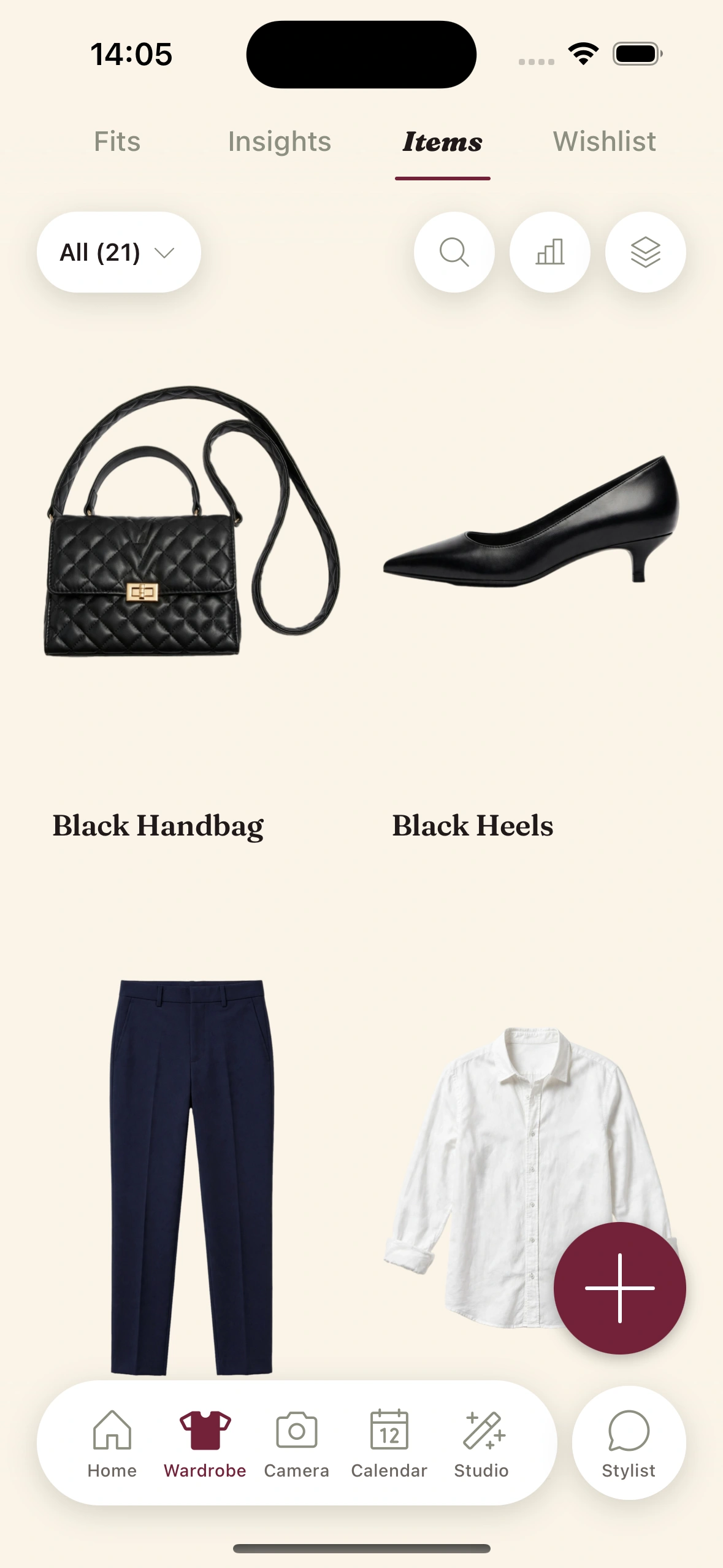
You don't need a separate wardrobe for each step. These eight pieces combine into outfits at every step of the scale: add the blazer and leather shoes to dress up, or swap in the knit polo or T-shirt and the sneakers to dress down. Navy, gray, white and khaki keep most combinations working together. The screenshot below shows a sample closet in Clottr's wardrobe screen, not this exact set.
- A navy blazer that isn't part of a suit, ideally unstructured so it also works over a T-shirt
- Gray tailored pants, or a tailored knee-length skirt
- Chinos in khaki or navy
- A white or light blue button-down shirt or blouse
- A fine-knit sweater in merino or cotton, in a neutral color
- A knit polo or a plain, well-cut T-shirt in a solid color
- Leather loafers, derbies or flats
- Clean, minimal leather sneakers
Want a fixed formula to test a small set? See the 3-3-3 rule (3 tops, 3 bottoms, 3 pairs of shoes).
Move up or down a step with one change
One swap is usually enough to move an outfit a step up or down the scale. That helps on days with a client meeting, a presentation or a team lunch.
- Add a blazer: the simplest way up a step, over a shirt, a fine knit or a plain T-shirt.
- Swap sneakers for loafers, derbies or flats to go up a step, and back again to go down.
- Trade a knit polo or T-shirt for a collared shirt or blouse.
- Swap chinos for tailored pants in wool or a wool blend.
- Tuck in your shirt and add a belt for a sharper line. Untucked reads more relaxed.
Office, then dinner? The same idea works for a day with two dress codes: dress for the dressier setting, then change one layer or the shoes.
Check the formality in Clottr
Clottr tags every item you add across roughly 19 attributes, formality among them, alongside category, color, material, season and more. Every tag is editable, so if your office treats a piece as dressier or more casual than its tag says, you can change it.
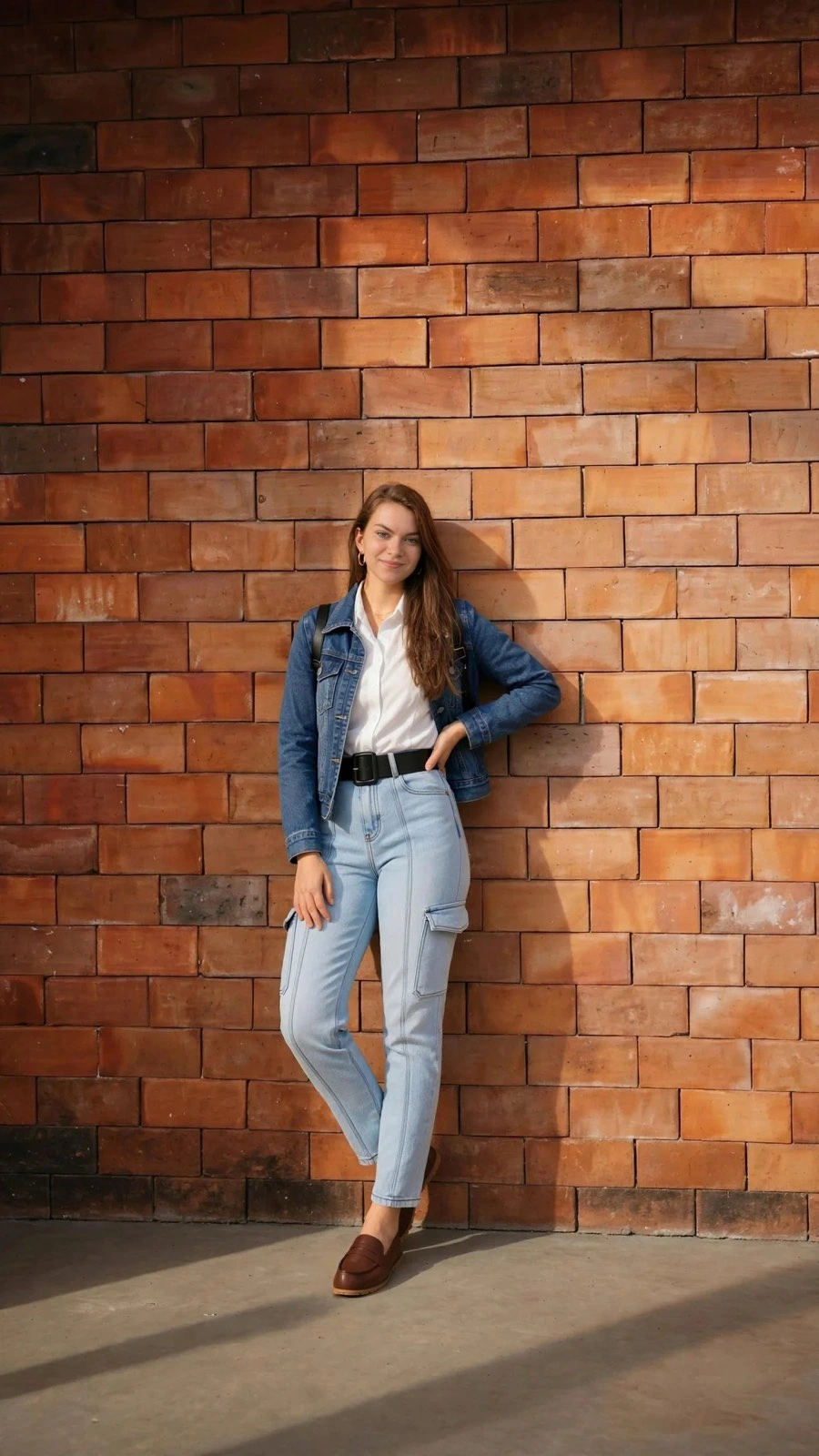
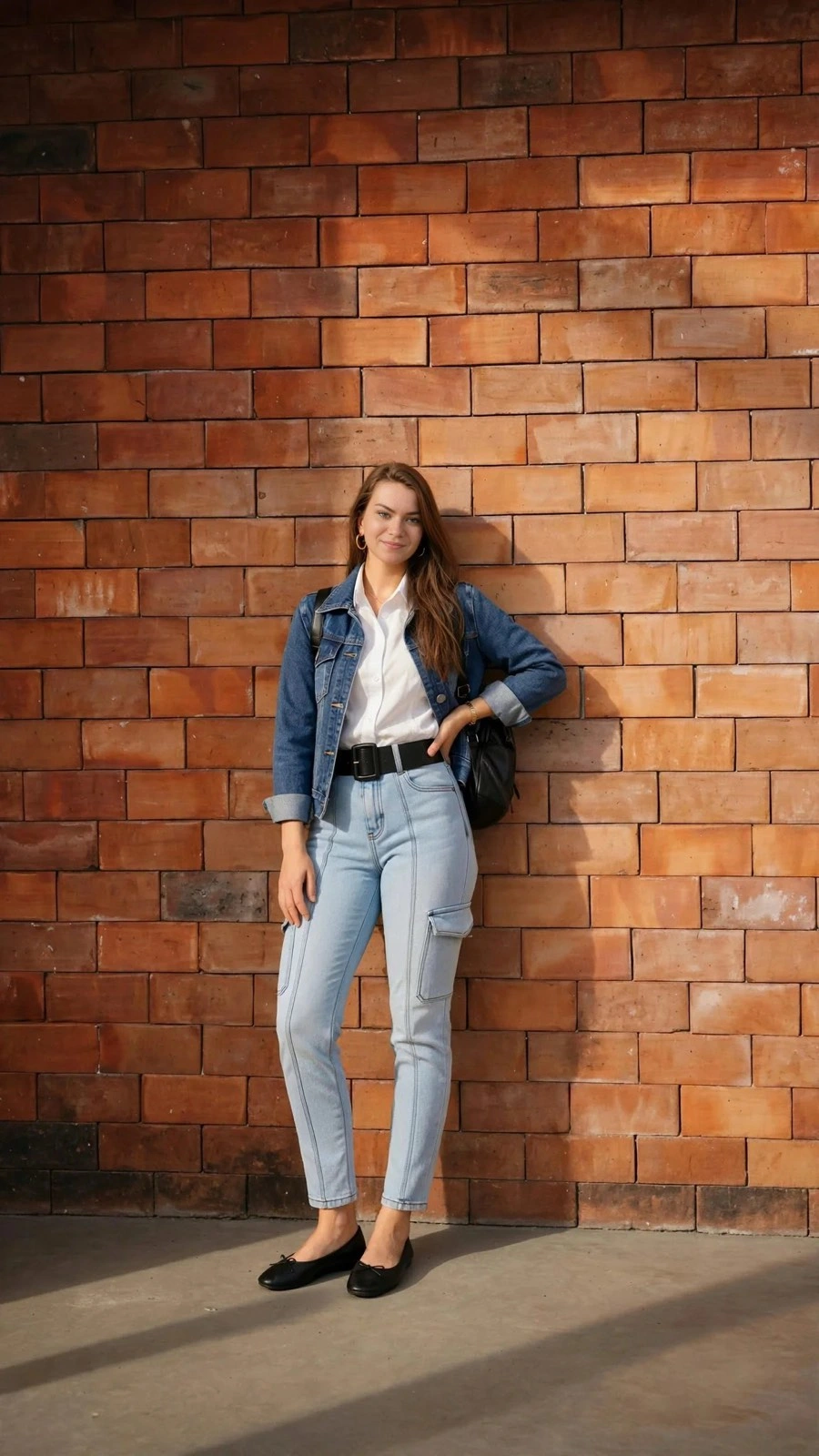
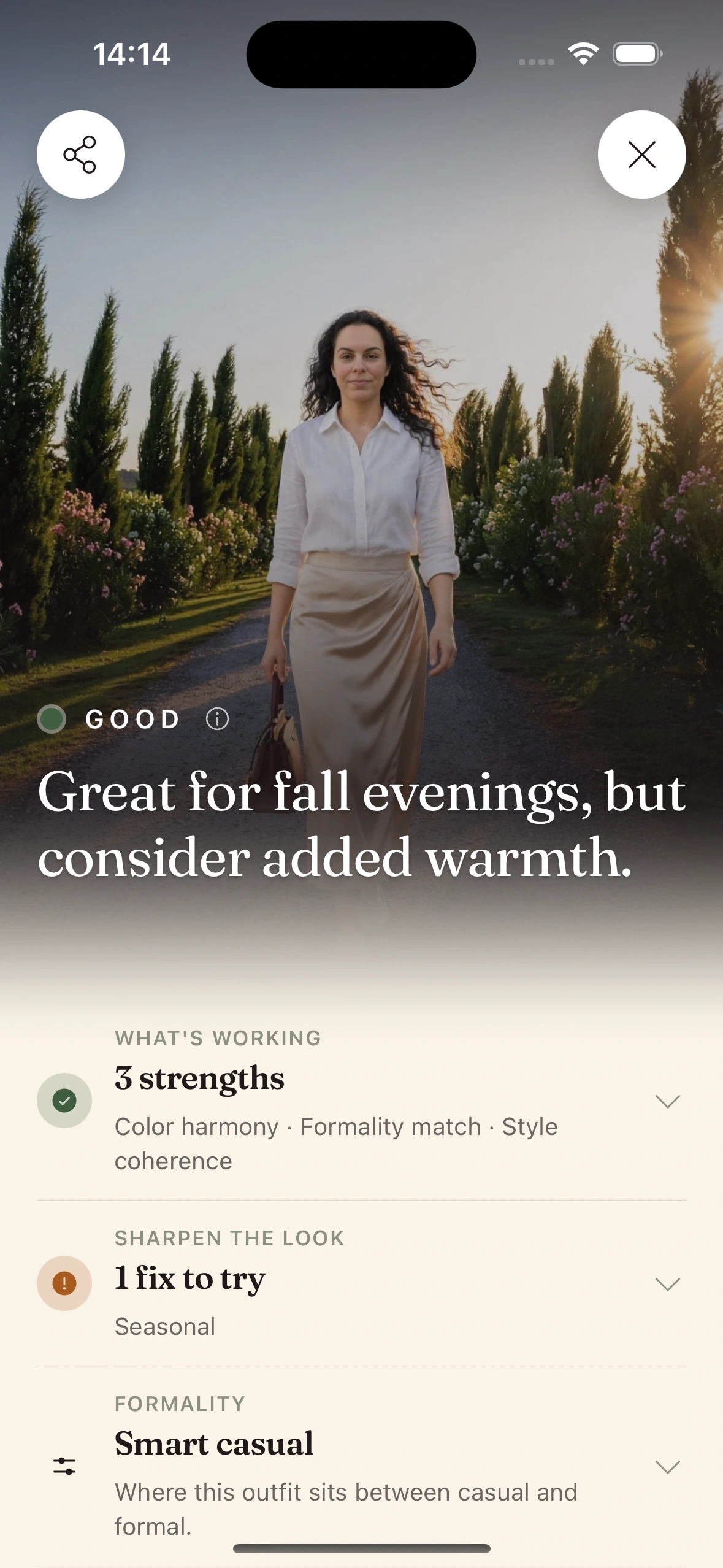
From there, filter your closet by formality, pick the pieces that match your office's spot on the scale, and build the look on the canvas. Then check it with Rate My Outfit, which scores a look on seven dimensions, formality match among them. It also scores a mirror selfie of what you're wearing.
You can plan outfits for the days ahead in the Calendar, too. See how items get cataloged and tagged on the digital wardrobe page. Clottr is coming soon: join the waitlist for early access.
What it can't do: Clottr doesn't know your company's dress code. The AI's formality tags and the Rate My Outfit score reflect general style conventions, so deciding where your office sits on the scale is up to you. Base it on what your colleagues wear. The formality label in a result (the screenshot shows smart casual) is Clottr's own, not a step on this page's scale.
Let Clottr build it from your closet
Clottr reads the occasion and weather, assembles an appropriate outfit from clothes you already own, and shows it on you before you leave the house.
Frequently Asked Questions
Are sneakers business casual?
Sometimes. Clean, minimal leather sneakers in white, black or another plain color work at the relaxed end of business casual (the two most relaxed steps). Running shoes, chunky athletic styles and anything scuffed don't. In a dressier office, stick to loafers, derbies, flats or low heels.
Are T-shirts business casual?
Usually not on their own. A plain, well-cut T-shirt in a solid color can work under a blazer, an overshirt or a cardigan at the most relaxed step. Graphic, slogan and logo tees, and anything faded or stretched out, aren't business casual.
Are jeans business casual?
Not by the classic definition, which leaves jeans out at every step. Some offices allow dark, plain jeans anyway (sometimes only on Fridays), and in practice their code is closer to smart casual. If you're not sure, wear chinos.
Is an open collar without a tie business casual?
Yes. No tie is the norm in business casual, so an open collar is standard. Undo the top button, or two at most, and keep the collar crisp enough to sit neatly under a blazer.
Are dresses business casual?
Yes. A simple dress in a solid color or a quiet print, around knee length or longer, is business casual on its own, and a blazer or cardigan over it dresses it up. A tailored sheath dress with a blazer sits at the dressy end of business casual. Leave very short, low-cut, sheer or going-out styles for after work.
What counts as business casual in summer?
The same code in lighter fabrics. Swap wool for linen, cotton, seersucker or a light blend. Short-sleeve shirts, knit polos and sleeveless blouses are often fine, especially with a layer you can add for meetings. Shorts, flip-flops and thin-strap tank tops still aren't. Keep a light layer at your desk for the air conditioning.
What's the difference between smart casual and business casual?
Business casual is usually the dressier of the two: tailored pants, chinos or skirts with shirts, blouses or knits, and no jeans. In US usage, smart casual is a step more relaxed: it usually allows dark jeans, and clean sneakers and T-shirts under a layer are common. In the UK, smart casual is often the name for the office code itself, close to what Americans call business casual. The two overlap, which is why the most relaxed version of business casual looks like smart casual with the jeans taken out.
What should I wear to a business casual interview?
Go a step dressier than the office's everyday look. A blazer, a collared shirt or blouse, tailored pants or a skirt, and leather shoes are a safe choice for most business casual offices. There's more in what to wear to a job interview.
Build a business casual week from your closet.
Join early. Discounted for life.