

Wardrobe rules
The 3-3-3 rule: 3 tops, 3 bottoms, 3 shoes
The 3-3-3 rule is a capsule challenge: pick 3 tops, 3 bottoms and 3 pairs of shoes, and wear only those 9 pieces, usually for a week or a trip. On paper, 3 × 3 × 3 makes 27 possible outfits.
It's widely shared on TikTok as a way to pack light and get dressed with fewer decisions. It works best when every top goes with every bottom, and it breaks down when the weather, a dress code or your patience with repeats gets in the way. Below: how it compares with Project 333, how to pick the 9, an example capsule, and how to check which combinations actually work.
The 3-3-3 rule vs Project 333
The names are close, but they are different challenges. The 3-3-3 rule is short and small: 9 pieces, usually for a week or a trip. Project 333 is Courtney Carver's minimalist challenge: dress with 33 items for 3 months.
Project 333 counts more than clothes. Shoes, outerwear, accessories and jewelry go into the 33, and it typically leaves out things like underwear, sleepwear and workout clothes. Most versions of the 3-3-3 rule count only tops, bottoms and shoes and say nothing about layers or accessories, so you set your own terms for those.
| At a glance | The 3-3-3 rule | Project 333 |
|---|---|---|
| Pieces | 9: 3 tops, 3 bottoms, 3 pairs of shoes | 33 items |
| How long | Usually a week or a trip | 3 months |
| What counts | Tops, bottoms and shoes | Clothes, shoes, outerwear, accessories and jewelry |
| Usually left out | Layers and accessories are up to you | Things like underwear, sleepwear and workout clothes |
| Where it comes from | Widely shared on TikTok | Created by Courtney Carver |
| Best for | Packing light, a quick closet test | A longer reset of how much you own and buy |
Why it works, and why far fewer than 27 make it
The math is simple combinatorics. Each of the 3 tops can go with each of the 3 bottoms, which makes 9 top-and-bottom pairs, and each pair can go with each of the 3 pairs of shoes: 3 × 3 × 3 = 27. On paper, 9 pieces give you three times as many outfits as pieces.
In practice, far fewer pass. A heavy wool sweater with light linen trousers mixes a cold-weather fabric with a hot-weather one, so one of them is usually wrong for the day. Sneakers with tailored trousers can miss the formality your day needs. Two loud colors can clash, and a pattern that works with one bottom can fight with another. How many survive depends entirely on your pieces, which is why picking them well matters more than the count.
The real payoff isn't 27 outfits. It's fewer decisions: with 9 pieces you know your options before you open the closet, and within a few days you see which pieces work hard and which ones don't.



How to pick the 9 pieces
Pick for combinations, not favorites. A piece that only works with one other piece still takes one of your 9 slots and gives you almost no outfits back.
- A neutral base: build most of the 9 in two or three neutrals that all go together, such as navy, white, gray, black, cream or denim.
- One accent: give one or two pieces a color or a pattern, so the week doesn't read as a uniform.
- Every bottom works with every top: check all 9 top-and-bottom pairs before you commit. If a top only works with one bottom, swap it.
- Shoes span casual to smart: one casual pair, one smarter pair and one in between, so the same outfit can go from errands to dinner.
- Dress for the actual week: check the forecast and your calendar first, and pick fabrics for the weather you'll really get.
Tip: lay all 9 pieces out together before you start. If one piece stands out as odd in the group, it will stand out in the outfits too.
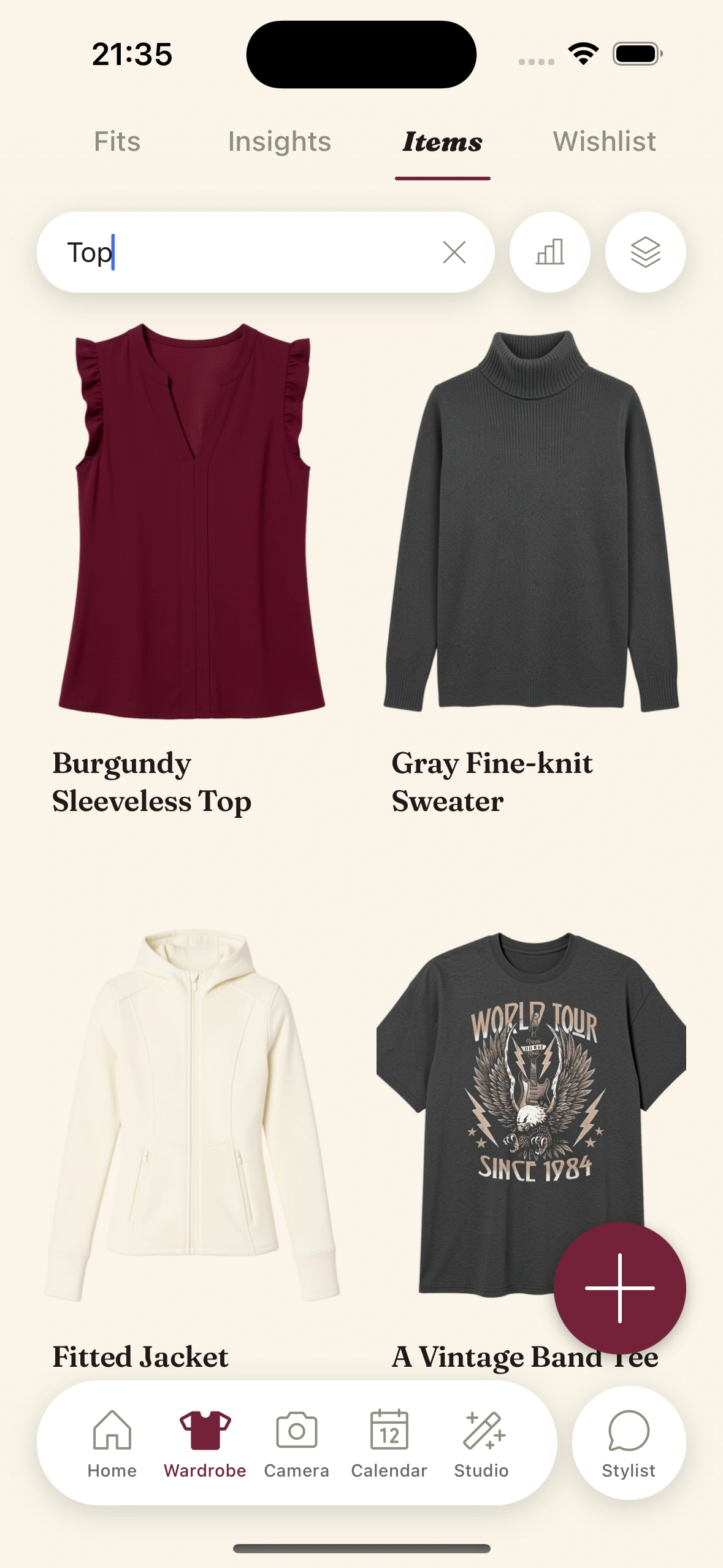
A worked example: 9 pieces, 27 combinations
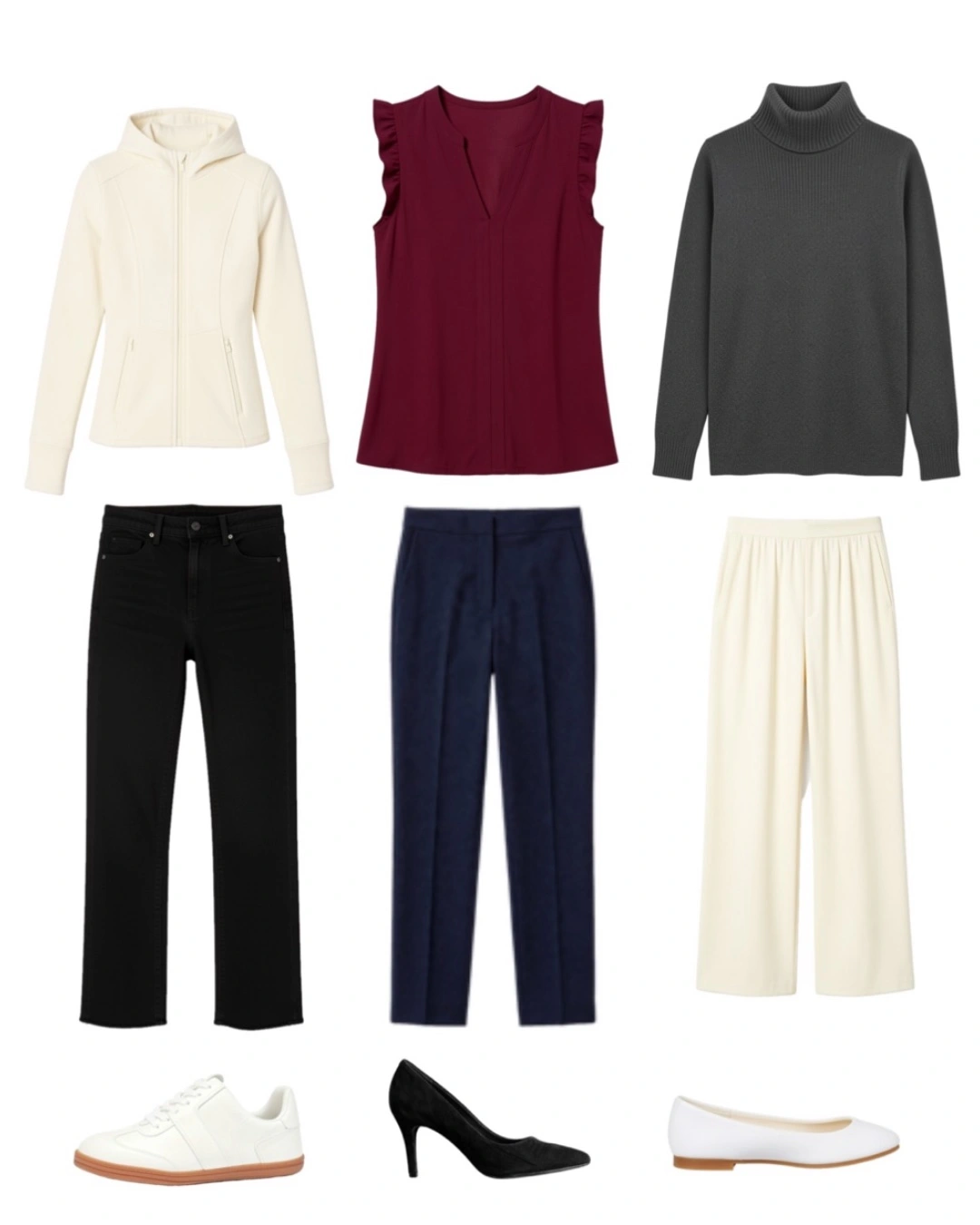
Here is one example capsule, for a mild week with a smart casual office and a free weekend. It's an illustration, not a prescription: swap in your own pieces and colors.
Not all 27 will work for every day. On a warm day the turtleneck and the zip jacket are out, and sneakers with the navy trousers may be too casual for some offices. Checking each combination is the step that turns 27 on paper into the outfits you'll actually wear.
| Piece | Category | Why it's in |
|---|---|---|
| Charcoal turtleneck | Top | Neutral, works smart or casual |
| Cream zip jacket | Top | Neutral, for cooler days |
| Burgundy sleeveless top | Top | The accent color |
| Navy tailored trousers | Bottom | The smart option |
| Cream wide-leg trousers | Bottom | Light neutral that goes with all three tops |
| Dark straight-leg jeans | Bottom | The casual option |
| White leather sneakers | Shoes | The casual pair |
| White ballet flats | Shoes | In between, they go with every bottom |
| Black suede pumps | Shoes | The smart pair |
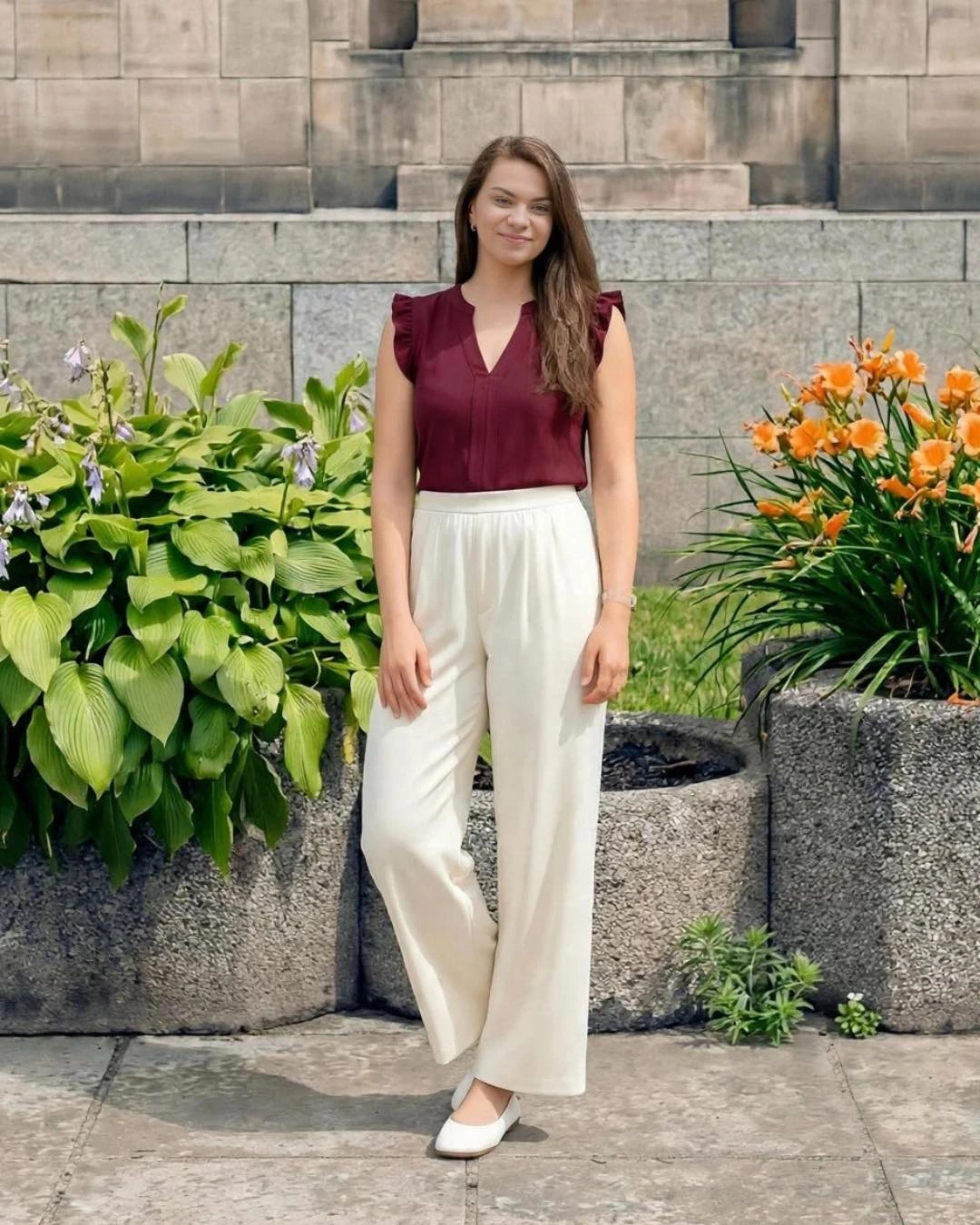
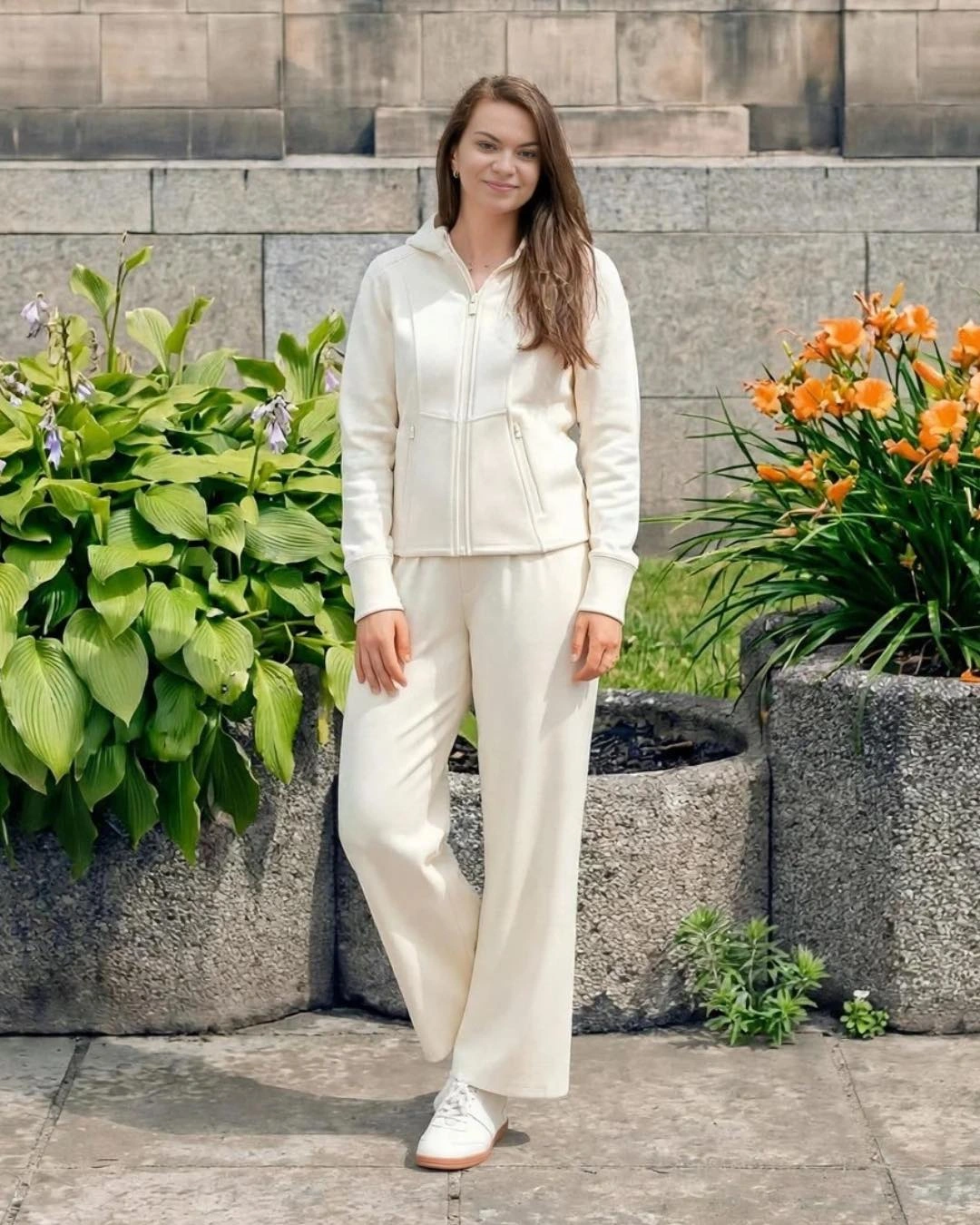
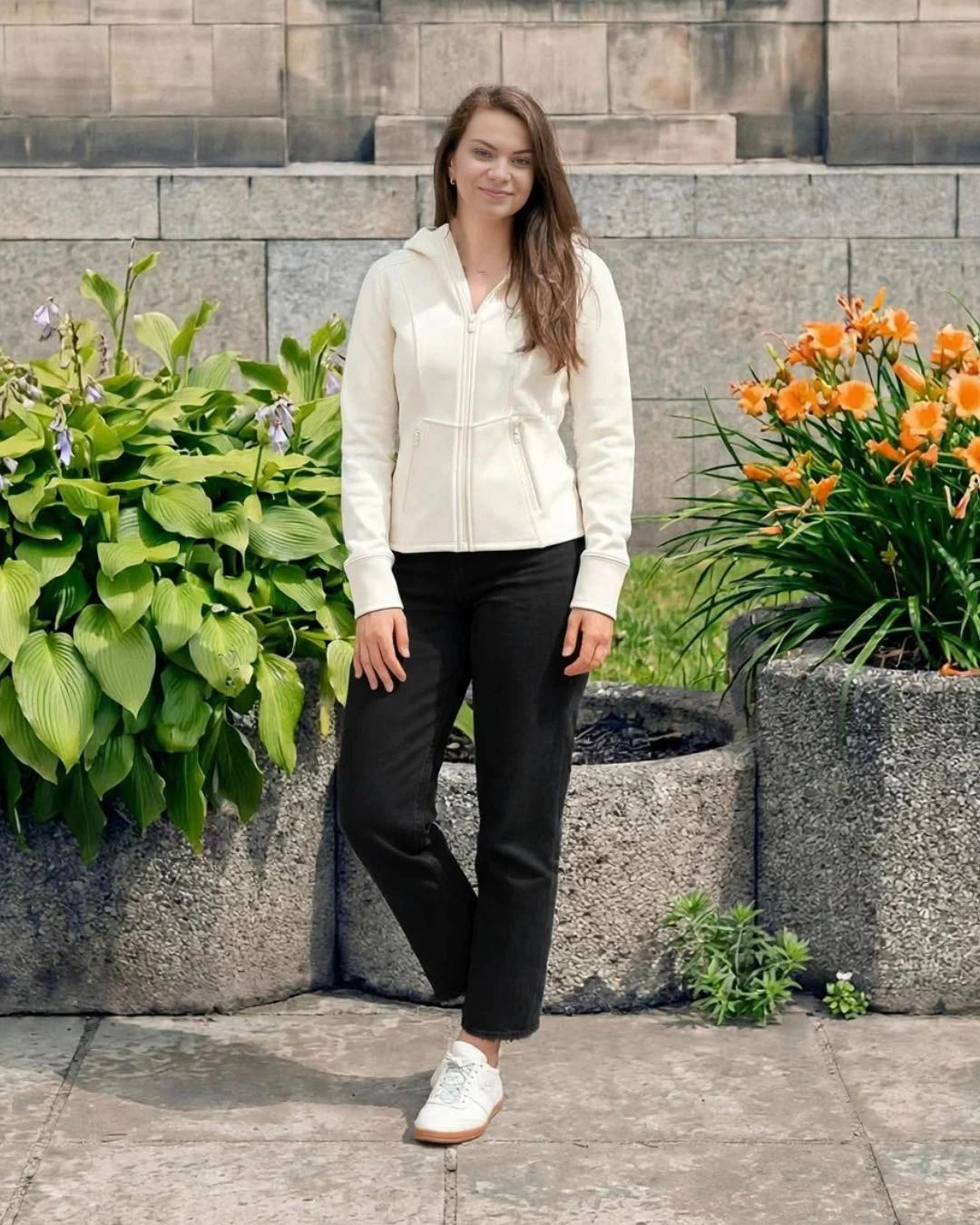
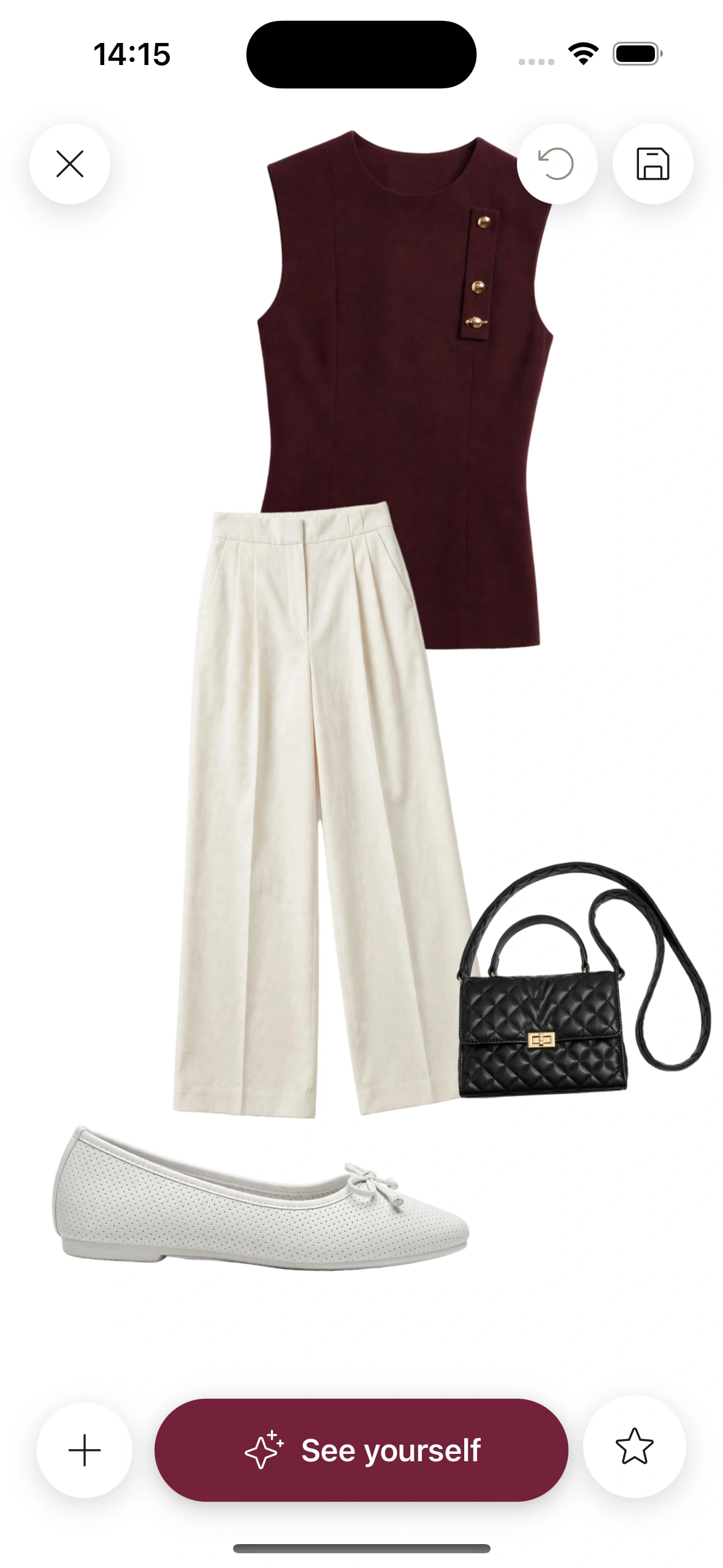
A few of the combinations: turtleneck, navy trousers and pumps for the office; burgundy top, cream trousers and ballet flats for a lunch meeting; zip jacket, jeans and sneakers for Saturday; turtleneck, jeans and ballet flats for errands; burgundy top, jeans and pumps for dinner. The picture shows the second one on Clottr's outfit canvas, with a bag added: the 3-3-3 rule doesn't count accessories.
Where the 3-3-3 rule fails
The rule is built for a short, predictable stretch. It strains in four places.
- Real seasons: a week that swings from rain to sun needs a layer the rule doesn't count. Add outerwear alongside the 9, and know that you did.
- Jobs with a dress code: if work asks for suits or a uniform five days a week, 3 tops and 3 bottoms can't cover the office and your weekend. Count the work wardrobe separately.
- People who hate repeating: if wearing the same shirt twice in a week wears you down, the rule will feel like a punishment, not a shortcut. A bigger capsule suits you better.
- Laundry: 3 tops for 7 days means rewearing or washing midweek. If neither is realistic, the rule isn't either.
For a longer stretch or your whole closet, size your wardrobe from your laundry cycle instead. The wardrobe rules hub has the formula and a table of starting points.
Check your 9 by hand in Clottr
Clottr has no one-tap 3-3-3 mode, but you can run the check by hand on your own closet. In your digital wardrobe, filter by category to see your tops, bottoms and shoes, then by formality and color to narrow them to the formality range your week needs and a few colors you can mix. Pick your 3 tops, 3 bottoms and 3 pairs of shoes.
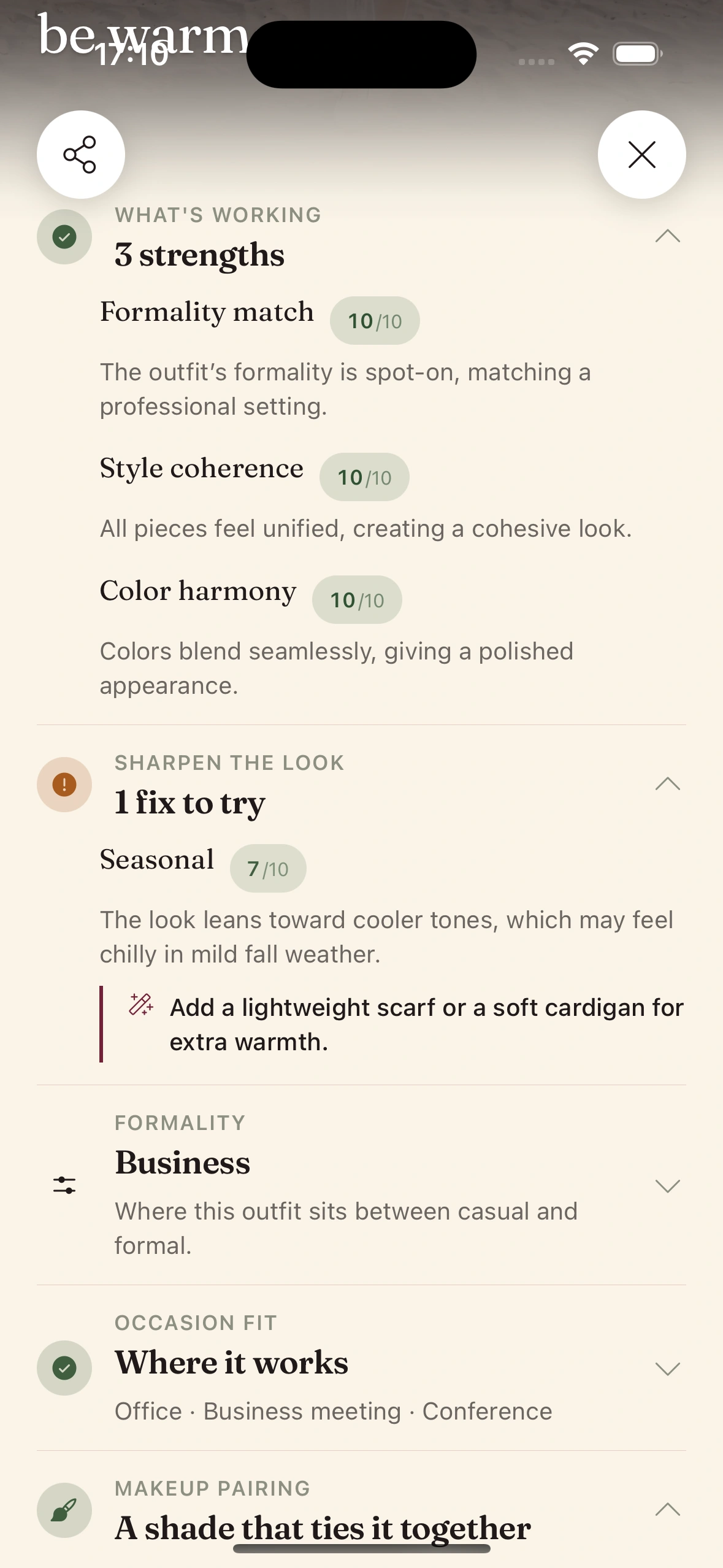
Then build each combination on the outfit canvas and score it with Rate My Outfit. It scores a look on seven dimensions: color harmony, proportion balance, formality match, style coherence, pattern mixing, occasion fit and seasonal fit. A weak score on season or formality tells you which combinations to drop before the week starts.
You don't have to build all 27. Start with the combinations you're unsure about. The ones that score well are your week.
Do it in Clottr
- 01
Filter your closet
Open your digital wardrobe and filter by category, then by formality and color, to shortlist tops, bottoms and shoes that could go together.
- 02
Pick the 9
Choose 3 tops, 3 bottoms and 3 pairs of shoes: a neutral base, one accent, and shoes from casual to smart.
- 03
Build each combination
Put one top, one bottom and one pair of shoes together on the outfit canvas, one combination at a time.
- 04
Score it
Score each look with Rate My Outfit and keep the combinations that score well on color, formality and season.
3-3-3 rule questions
Does the 3-3-3 rule include outerwear?
Usually not. Most versions count tops, bottoms and shoes only, so a jacket or coat for the weather sits outside the 9. If you want a stricter version, count a layer as one of your 3 tops.
What about dresses in the 3-3-3 rule?
Count a dress as one piece in the top or the bottom slot, whichever you're shorter on. A dress doesn't mix with other pieces the way separates do, so it adds fewer combinations: treat it as a ready-made outfit and pair it with each of your 3 pairs of shoes.
Is the 3-3-3 rule for travel or for every day?
Both, but it fits a trip best. For a week away it keeps your bag small and your mornings simple. At home, try it for one week as a test: you learn which pieces combine well and which ones you actually miss.
How is the 3-3-3 rule different from Project 333?
Scale. The 3-3-3 rule is 9 pieces (tops, bottoms and shoes), usually for about a week. Project 333, Courtney Carver's minimalist challenge, is 33 items for 3 months. It counts shoes, outerwear, accessories and jewelry too, and typically leaves out things like underwear, sleepwear and workout clothes.
How many outfits can you make with 9 pieces?
27 on paper: 3 tops × 3 bottoms × 3 pairs of shoes. How many work in practice depends on the weather, the formality you need and how your colors go together, so check each combination instead of trusting the number.
Can I do a 4-4-4 rule instead?
Yes. 4 tops, 4 bottoms and 4 pairs of shoes give 64 combinations on paper, which suits a longer stay or a week with more occasions. Other counting rules work the same way, such as 5-4-3-2-1 packing lists that count down across categories (the exact categories vary). Pick the version that matches how long you're away and how often you can do laundry.
Keep going

Wardrobe Rules
Wardrobe formulas explained, and how many clothes you actually need.

Digital Wardrobe
Photograph or import your closet, then filter it by category, formality and color.

Rate My Outfit
Score any look on seven dimensions, from color harmony to seasonal fit.

What should I wear today?
Dress for today's forecast, your calendar and what's clean and ready.
Run the 3-3-3 check on your closet.
Join early. Discounted for life.