
How to dress
How to dress for your body type
Dressing for your body type comes down to proportion: where your waist sits, how volume is spread between your upper and lower half, and where the eye lands first. The shape names (rectangle, hourglass, pear, apple, inverted triangle) are a quick way to talk about that. They're starting points, not laws.
Many people sit between two shapes, and the same body reads differently in a cropped jacket and in a long coat. So use the ideas below to choose what to try, then judge the outfit on your own photo. That beats every rule on this page.
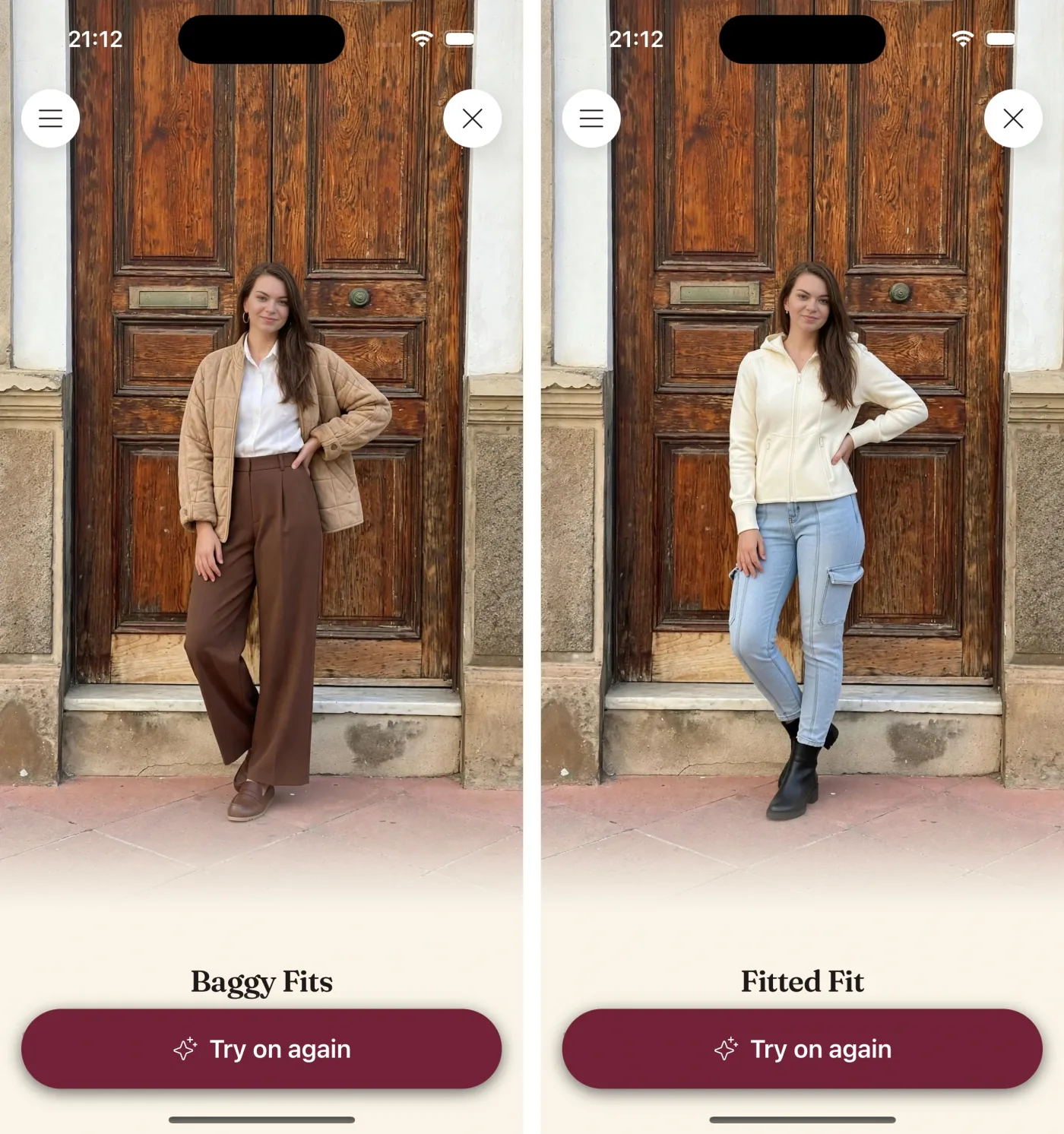
Figure out your shape in a few minutes
All you need is a full-length mirror, plus a tape measure if you want numbers. This part is yours to do at home.
With a tape, keep it level and snug but not tight, and note the numbers for yourself. Without one, the mirror is enough: you're looking for the overall pattern, not a precise result. Either way, stand straight, in fitted clothes or underwear, and check three places.
- Shoulders: the widest point across your upper body, just below the shoulder joints. In the mirror, check whether they sit wider than your hips, narrower, or about level.
- Waist: the narrowest part of your torso, usually a little above your belly button. Notice whether it curves in clearly, a little or hardly at all.
- Hips: the widest point around your hips and seat. Compare it with your shoulders.
- Then the one question that matters: is your widest point at the shoulders, through the middle, at the hips, or are shoulders and hips about even?
Many people land between two shapes, and that's normal, not a failed quiz. Read both rows of the table below, keep the ideas they share, and let the outfit on your photo settle the rest.
The five body shapes at a glance
These five names are the ones you'll see most. Each describes where your width tends to sit, and the usual advice is about balancing it.
Treat every row as a tendency, not a box: your shape suggests what to try first, not what you're allowed to wear.
| Shape | How to spot it | The usual idea |
|---|---|---|
| Rectangle | Shoulders, waist and hips about the same width, with little waist definition | Create a waist where you want one: belts, wrap shapes, tucked-in shirts, jackets that nip in |
| Hourglass | Shoulders and hips about even, with a clearly narrower waist | Follow the waist rather than hide it: fitted or belted shapes, wrap dresses, high-rise bottoms |
| Pear (triangle) | Hips wider than shoulders, often with a defined waist | Bring the eye up and add width at the shoulders: detailed necklines, structured shoulders, lighter colors above the waist |
| Apple (round) | Fuller through the middle, often with slimmer legs and less waist definition | Draw a long vertical line: open layers, V-necks, fabrics with some structure that skim the middle instead of clinging |
| Inverted triangle | Shoulders wider than hips | Balance the shoulders with detail or a little volume below: wide-leg trousers, A-line skirts, simpler necklines |
Proportion beats labels
Strip away the labels and the advice comes down to a few ideas about proportion. They work for every shape, and they're a good place to start.
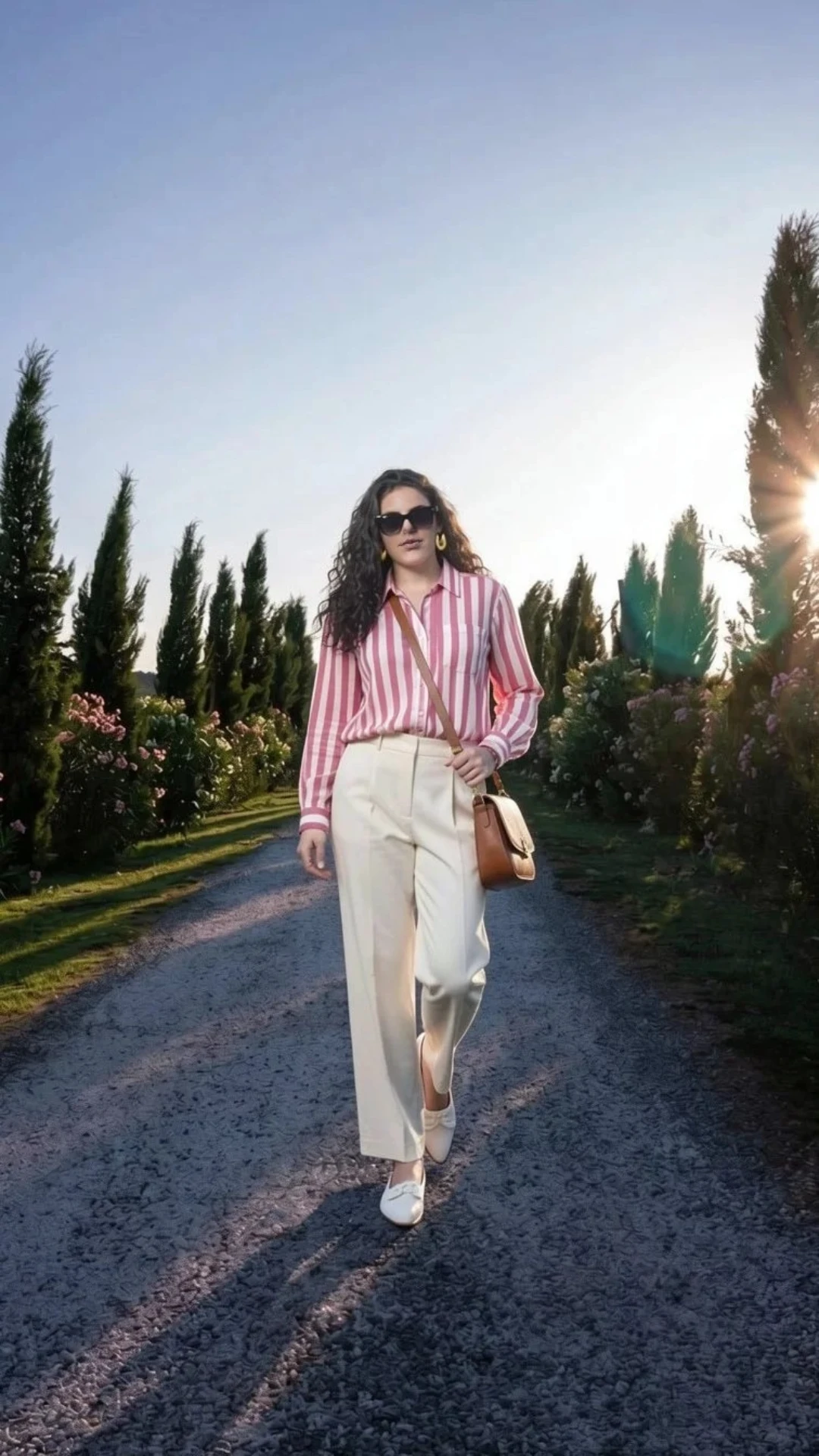
- Where the waist sits. A tuck, a belt or a high rise draws the line between your upper and lower half. Raise it and your legs tend to look longer; leave it undefined and you get one long, straight line. Both are choices, not mistakes.
- One focal point. The eye goes to the strongest detail first: a bold collar, a bright color, statement earrings, a striking shoe. Put it where you want attention and keep the rest quieter. Color works the same way: a strong contrast at the waist splits the body in two, while one color from head to toe reads as a single line.
- Balanced volume. If one half is loose or full, the other usually looks better closer to the body: wide trousers with a fitted knit, a slim skirt with a slouchy sweater. Volume on both halves can work, but it takes more care.
- Lengths that end at a narrow point. Hems, sleeves and jackets look cleanest where your body narrows: at the waist, the wrist, just above or below the knee, the ankle. A hem that stops at the widest part of your thigh or calf pulls the eye there.
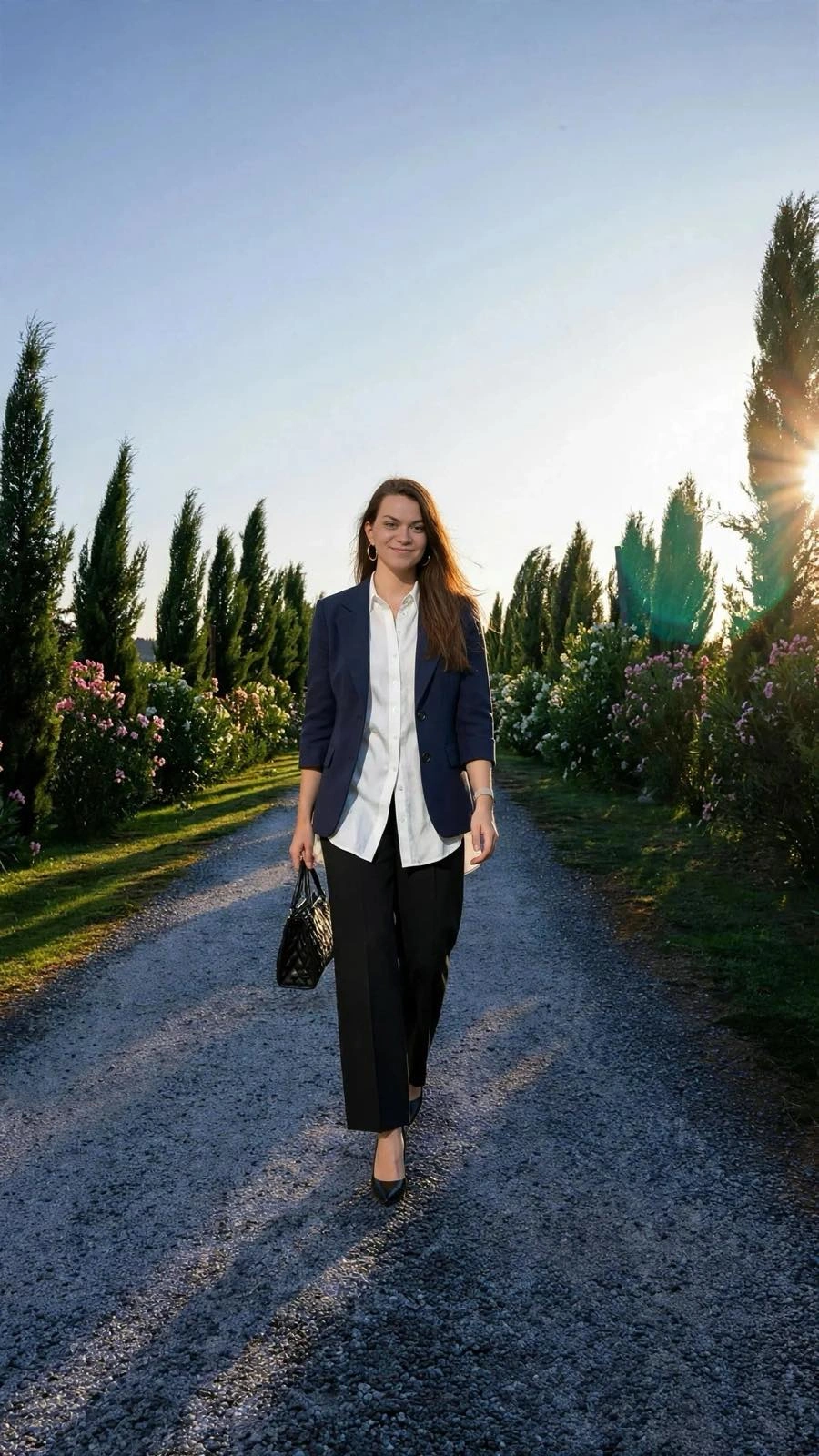
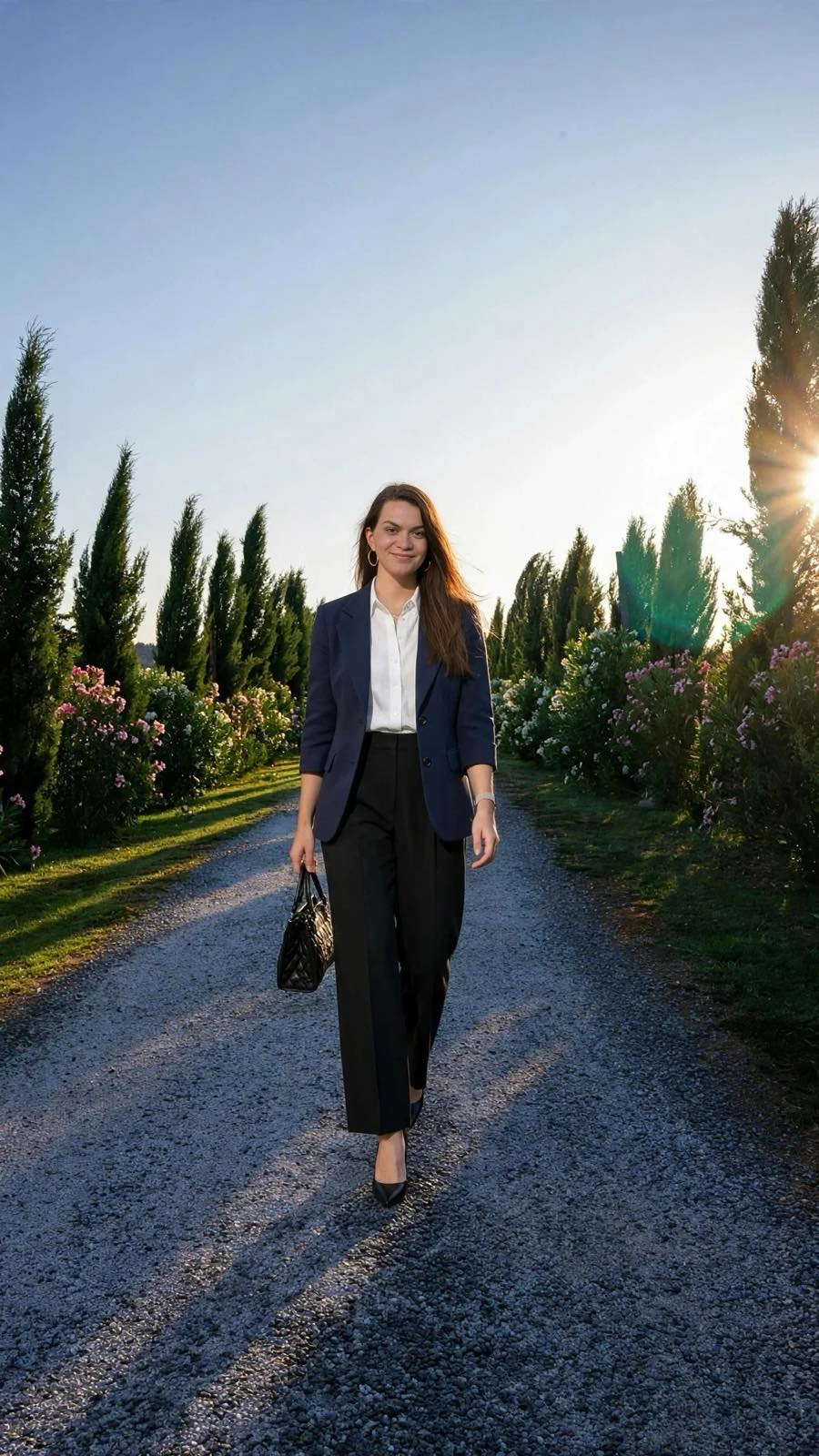
An example: a boxy jacket over wide-leg trousers puts volume on both halves, so the outfit can look heavy. Swap in a fitted jacket, or one that ends at the waist, and the waist shows again. That's the whole method: change one proportion, then look again.
Seeing it on you beats the theory
A shape chart tries to predict how an outfit will look on you before you've seen it. A try-on shows you an approximation of it. Clottr's virtual try-on renders the piece on your own full-body photo, so you judge its color, style and proportions on your body, not on a model or a diagram.
Build a full outfit on the canvas (tops, bottoms, shoes, accessories) and look at where the waist falls, how long the jacket reads and whether the volume balances. Then Rate My Outfit scores the look on seven dimensions. Proportion balance is one of them, alongside color harmony, formality match, style coherence, pattern mixing, occasion fit and seasonal fit.
Clottr doesn't ask for your body type. It shows the outfit on your photo, and the final call on what suits you is yours.
What try-on can't do: it's an approximation for judging the look, not the fit. It doesn't tell you your size or exactly how a garment will fit, and where a hem really lands depends on the size you order, so check the store's size chart. A render can occasionally change the face a little or blend layered pieces; running it again usually fixes that.
Men and plus size: the same logic
Many body-shape charts are written for women, but proportion isn't gendered. Men's builds are often described in similar terms (broad shoulders with narrower hips, a straight build, hips wider than the shoulders, fuller through the middle) and respond to the same levers: trouser rise, jacket and shirt length, how much volume each half carries and where the eye lands first. Clottr's try-on renders men's outfits too.
Plus size works the same way. The goal isn't to hide your body or to look smaller; it's an outfit where the proportions look deliberate. Start with clothes that fit you well today, set the waist where you want it, balance volume between your upper and lower half, and end hems at a narrow point. Seeing the outfit on your own photo, instead of on a sample-size model, tells you more about the look than any chart.
Do it in Clottr
- 01
Set up your try-on photo
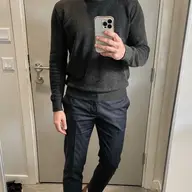
Take one full-body selfie: facing the camera, against a plain wall, in even light. A mirror selfie works. Fitted clothes make your proportions easier to read. The try-on photo guide walks you through it.
- 02
Build the outfit on the canvas
Add pieces from your wardrobe. Change one thing at a time, like a shorter jacket or wider trousers, so you can see what each swap does.
- 03
Check proportion balance
Score the look with Rate My Outfit. Proportion balance is one of its seven dimensions, so you see whether the outfit's proportions balance.
- 04
Try it on
Render the outfit on your photo with virtual try-on and look at where the waist sits, how the lengths read and where the eye lands. Before you buy, check your size on the store's size chart.
Body type questions
How do I know my body type?
Compare your shoulders, waist and hips in a full-length mirror or with a tape measure. Shoulders and hips about even with little waist definition is a rectangle; even with a clearly narrower waist, an hourglass; hips wider than shoulders, a pear; fuller through the middle, an apple; shoulders wider than hips, an inverted triangle. A mix of two is normal.
Do body type rules still matter?
As a starting point, yes. The useful part of every rule is proportion: where your waist sits, how volume balances between your upper and lower half, and where the eye lands. The labels matter less, and the outfit on your own body is the final test.
What if I'm between two body shapes?
Combine them: keep the ideas both shapes share, then try the outfit on your own photo. Being between shapes is common, and when two rules disagree, the one that looks better on you wins.
Does dressing for your body type work for men?
Yes. Proportion isn't gendered: trouser rise, jacket length and where the eye lands matter whether your build is broad-shouldered, straight, narrower at the shoulders than the hips, or fuller through the middle.
How do I dress for my body type if I'm plus size?
Work with proportion, not against your body: clothes that fit you well today, a defined waist where you want one, and balanced volume. The goal is an outfit that looks deliberate, not one that hides you.
Can an app tell me my body type?
You don't need an app for that: a mirror, plus a tape measure if you want numbers, is enough. Clottr doesn't try. It doesn't ask for your body type, and it creates no biometric templates. It stores your selfie, the pose image made from it and your try-ons, and renders the outfit on your own photo so you see the proportions on your body and decide for yourself. Details are in the privacy policy.
Is virtual try-on accurate for my body?
For the look, it's a good approximation; for size and fit, no. Try-on renders the piece on your own photo, so you see how its color, style and proportions come together on your body. It doesn't tell you your size or exactly how a garment will fit, and a render can occasionally change the face a little or blend layered pieces (running it again usually fixes that). More in how accurate virtual try-on really is.
Keep going
Virtual Try-On
See any piece or full outfit from any online store on your own photo.

Rate My Outfit
Score a look on seven dimensions, proportion balance among them.

How accurate is virtual try-on?
An honest look at what a try-on render can and can't tell you.
How to dress better
Practical basics on fit, color, proportion and buying only what you'll wear.
Skip the theory. Try it on your body.
Join early. Discounted for life.