I spent most of my twenties wearing the same rotation of white or blue shirts and blue jeans. Not with any particular logic or idea, just what I knew didn’t “look bad”. It didn’t look particularly good either, just ok. Only going on a Tinder date with my future girlfriend and her saying “I almost swiped left on you since your pictures were kind of whatever, nothing interesting” did it occur to me that like most things in life, the first impressions matter. And I looked boring. Well, this is when I decided to change my approach to clothing and focus on showing “ME” through the fits.
I didn’t know where to start. Every piece of style advice I found online was either aimed at people who already cared about fashion or so vague that it was useless. “Invest in quality basics.” Great. What does that mean? I already had 20 quality shirts, so what? Which basics? Quality according to whom?
So this is the guide I wish I’d had. It’s long, it’s opinionated in places, and it’s based on years of trial and error, including some truly regrettable purchases (a black shirt with short sleeves, worn by a 20 year old, that made me look like I was 60 with grandkinds).
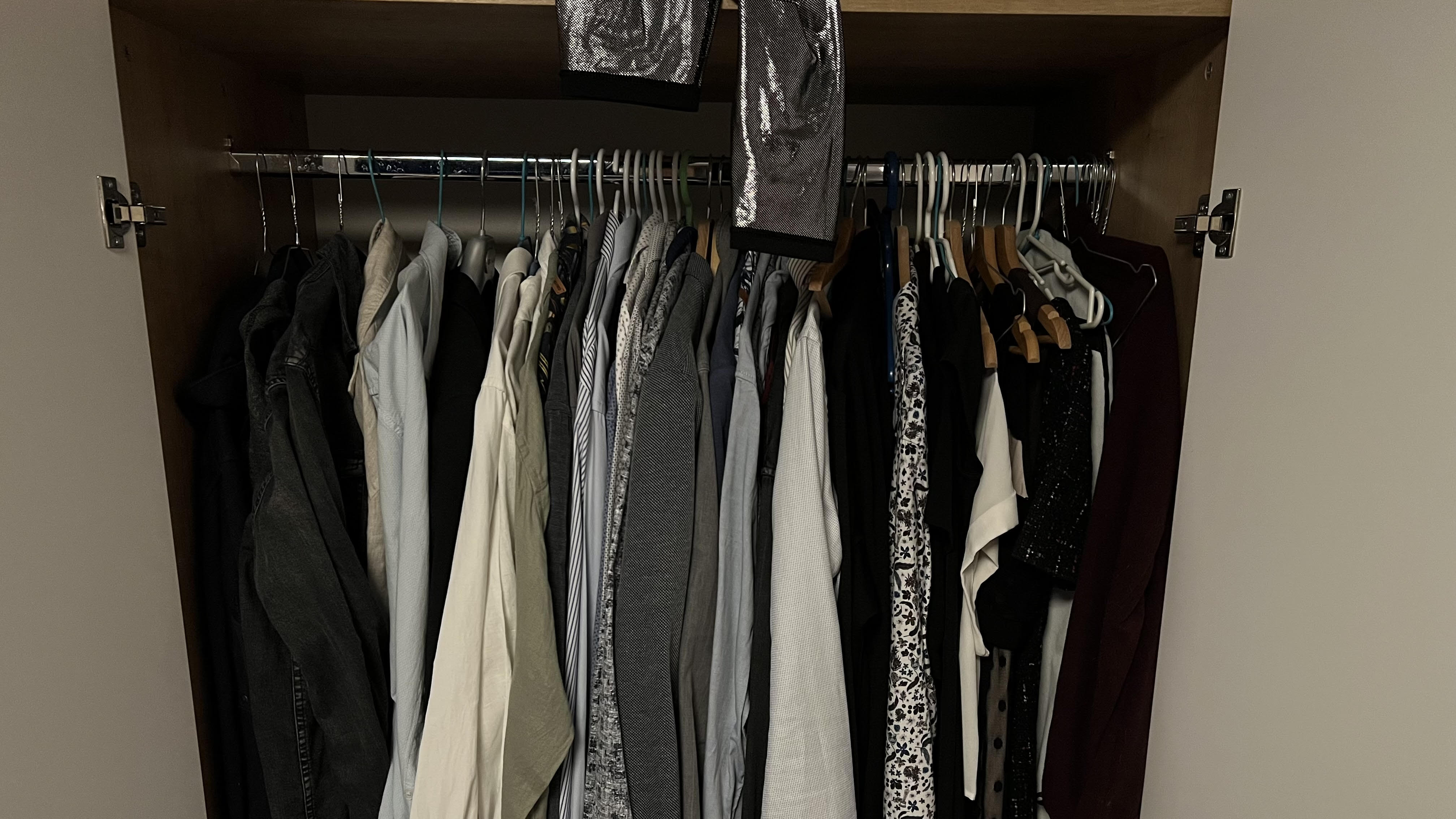
Why do I feel like I have nothing to wear even though my closet is full?
I used to have a closet stuffed with probably 50+ items and still stand there every morning thinking I have nothing to wear or white shirt with blue jeans again? The problem wasn’t quantity. It was that I’d bought everything in isolation. A cool shirt at one store, pants at another, a jacket because it was on sale without ever thinking about whether any of it worked together.
The result was a closet full of orphan pieces. A Hawaiian shirt with nothing to match it (guess what I wore it with, yes, blue jeans again). Dress shoes but no dress pants. Six nearly identical navy crewnecks.
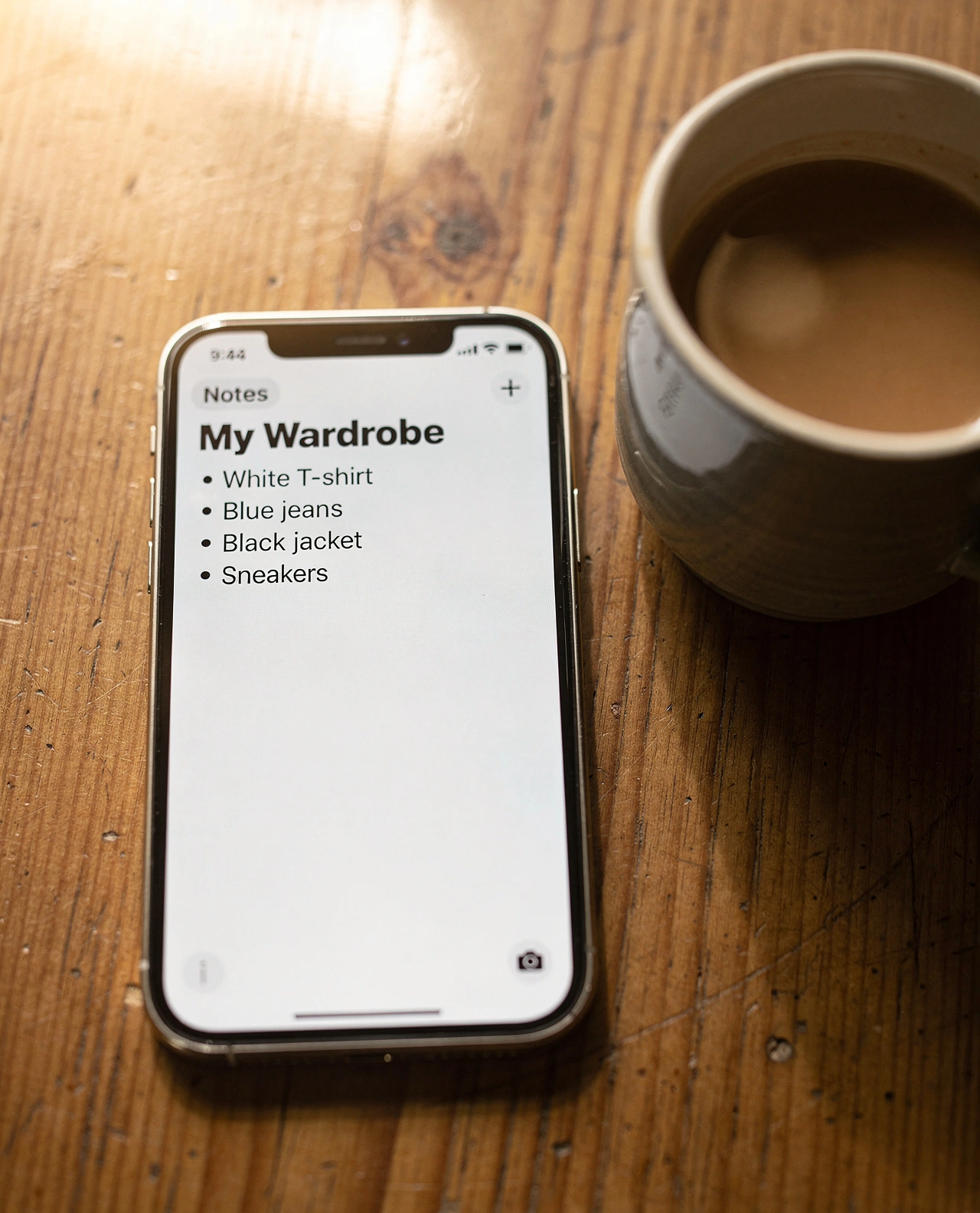
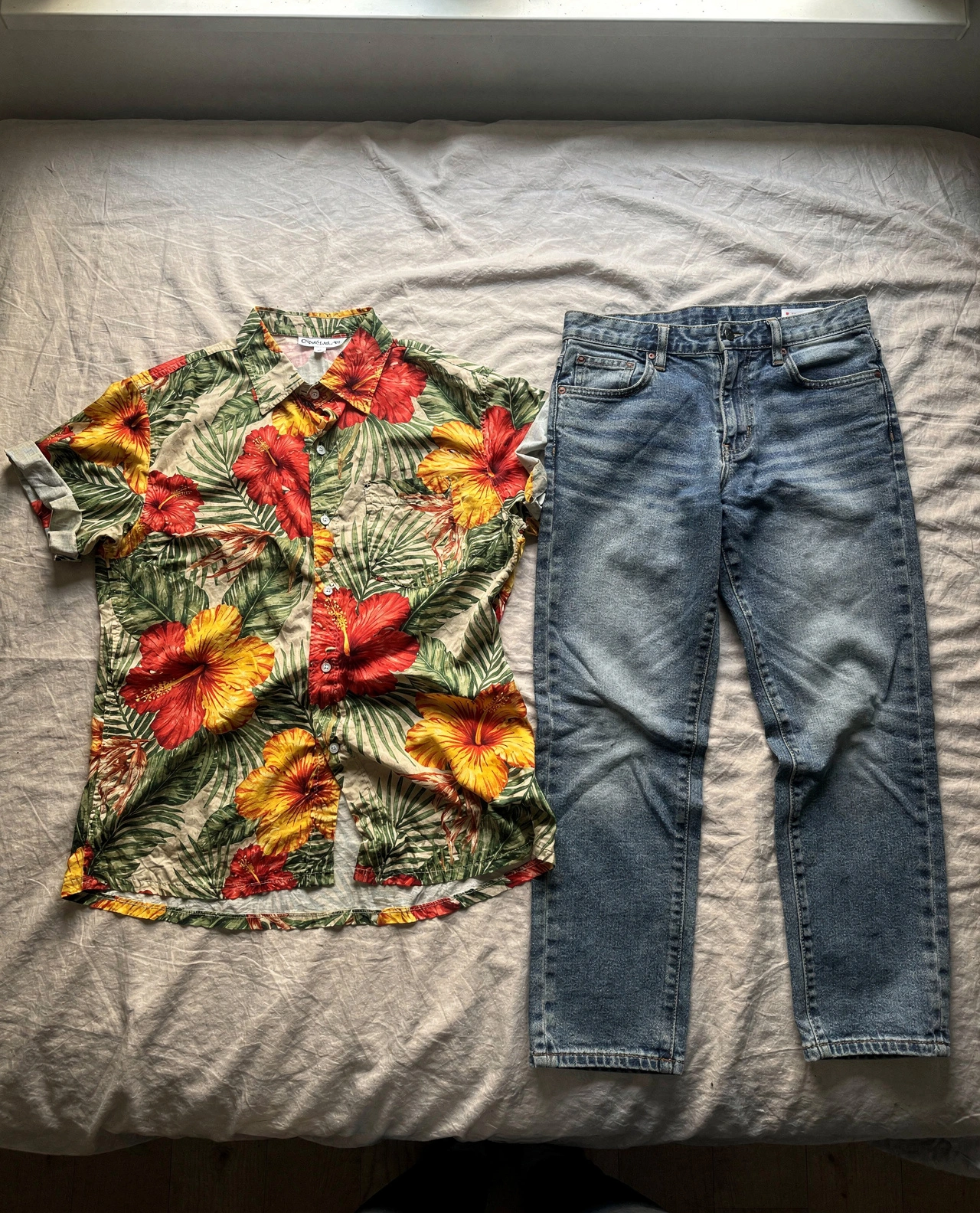
The fix is simple but requires a mindset shift: stop thinking about individual items and start thinking about outfits. Before you buy anything new, ask yourself: can I make at least three complete outfits with this and what I already own? If the answer is no, walk away. You’re just adopting another orphan. (BTW, this is also an easy way to save money from unnecessary purchases!)
I keep a note on my phone with my current wardrobe roughly maped out. It’s not fancy. But it’s stopped me from buying yet another pair of slightly different shade of blue jeans.
What does “fit” actually mean?
Fit is the single biggest lever you have. I own a 20,00 EUR white and black t-shirt that gets more compliments than anything else in my closet, purely because it fits me well. Meanwhile, I’ve got a 180,00 EUR shirt from a brand I won’t name that makes me look like I’m wearing my dad’s clothes (or that black short sleeved shirt!).
Here’s what to actually look for:
Shoulders are the hardest thing to alter, so get these right first. The seam should sit right at the edge of your shoulder bone. Not drooping down your arm, not pulling tight across your back.
The chest and torso should follow your body’s shape without pulling or bunching. If you see horizontal stress lines across the buttons, it’s too tight. If there’s enough extra fabric to pinch a handful, it’s too big.
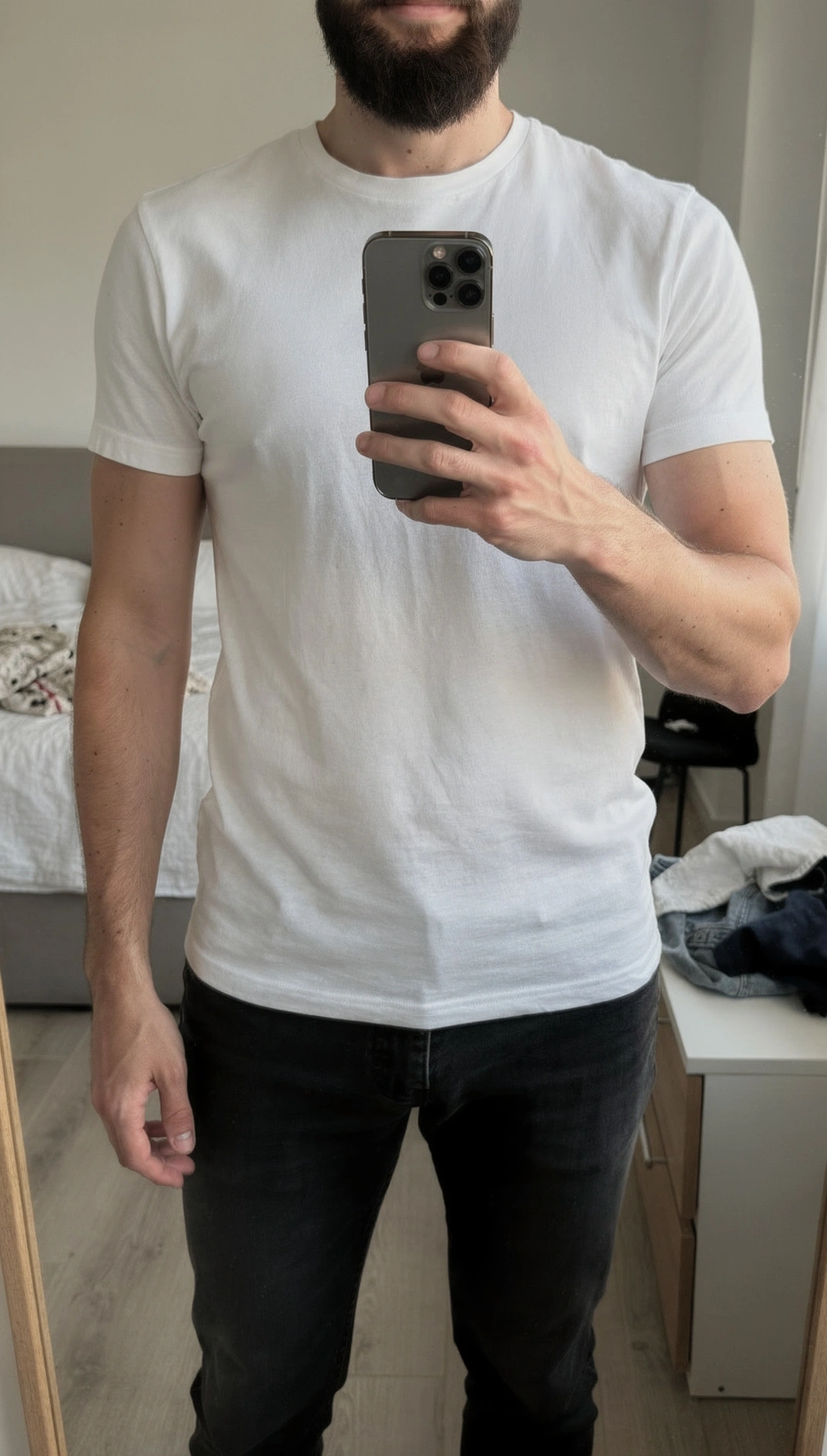
For shirt length, aim for somewhere around your mid-fly area. The old-school rule was “it should cover your belt,” which is close enough. You shouldn’t see belly when you raise your arms, and it shouldn’t look like a nightgown (believe me, I know!).
Pants are their own beast. The waistband should sit comfortably without a belt doing all the structural work. And watch the ankles. Fabric shouldn’t pool on your shoes like a deflated parachute. A slight break (where the fabric just touches the top of your shoe) is the sweet spot for most people.
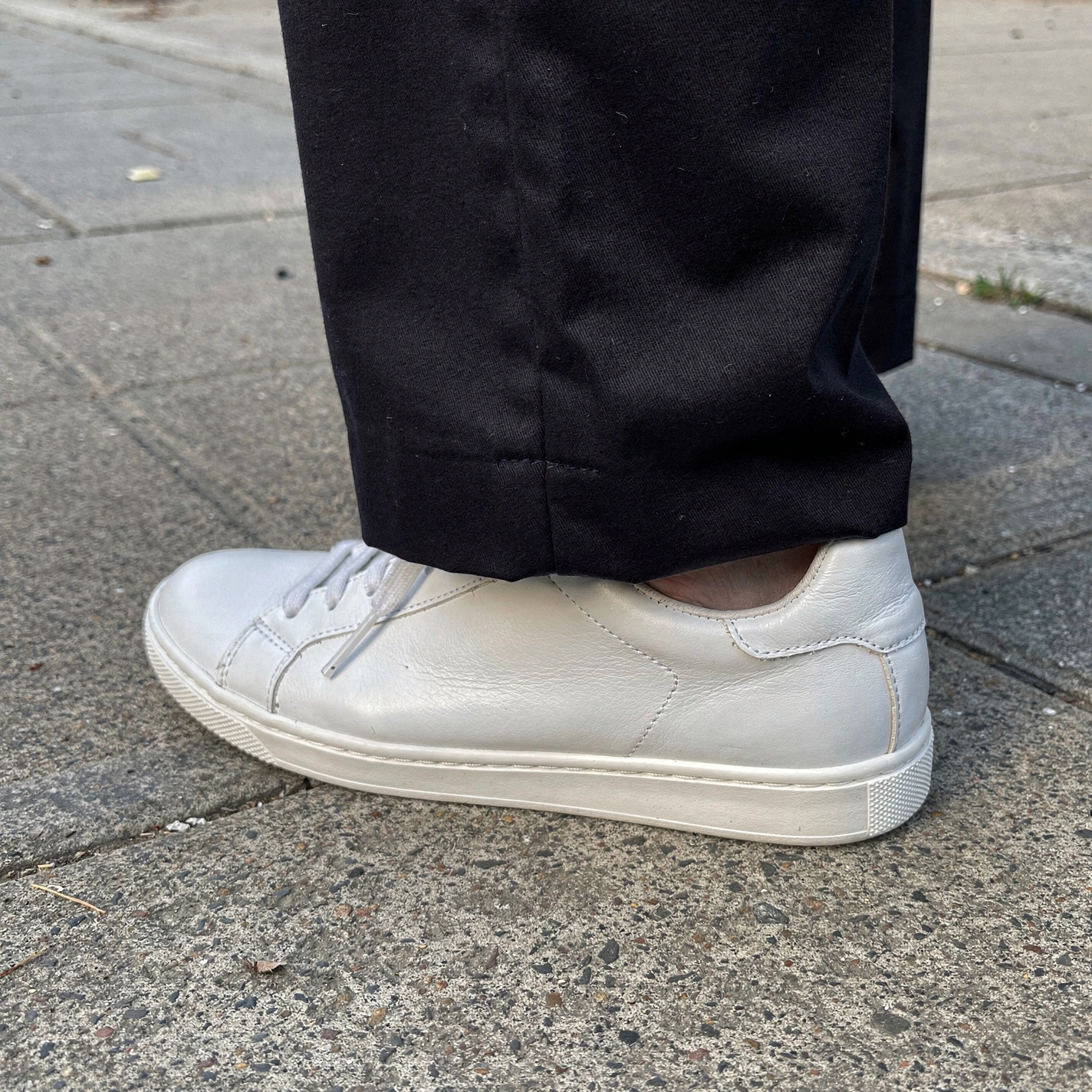
The frustrating truth is that sizing varies wildly between brands. A medium at one store is a large at another. I’ve learned to ignore the label entirely and just try things on - or, when shopping online, to be ruthless about returning anything that doesn’t fit right. Most people keep ill-fitting clothes out of laziness. Don’t be most people.
How do I figure out what colors work for me?
Forget “seasonal color analysis.” I went down that rabbit hole once and ended up convinced I was an “Autumn” who should only wear rust and mustard (I am also a slice of bread if Buzzfeed is to believed. You get my point, online quizzes don’t really tell us much). Turns out I just liked those colors anyway and the quiz was telling me what I wanted to hear.
Here’s what works in practice:
Start with neutrals as your foundation. Black, white, navy, gray, olive, beige. These are the boring-but-essential pieces that make everything else in your wardrobe play nicely together. Think of them as the rhythm section, nobody comes to hear the bass player, but the song falls apart without one. Yes they won’t make you stand out, but they will make the look “work” as boring and correct as it can.
Then pick one or two accent colors that you like wearing. Not what a color wheel says. What you like. I gravitate toward light blue light cream / yellowish and hate green. So this is what I started looking for when buying new clothes, knowing that at home I have a boring colored shirt / pants that will surely work.
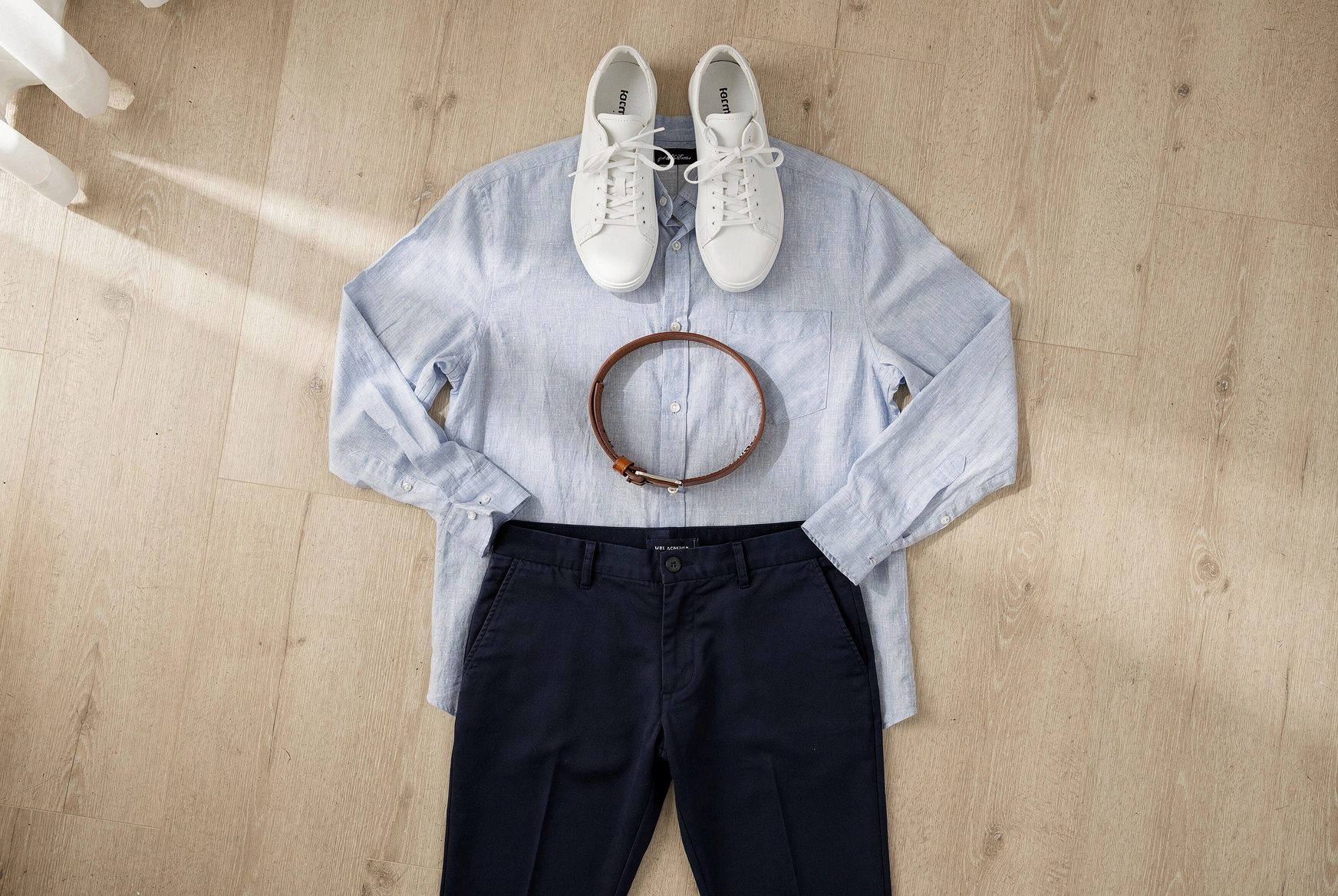
For putting outfits together, stick to 2-3 colors max and coordinate rather than match (Start with 2 as it is easier to mess up with more). The matchy-matchy thing, belt matches shoes matches watch strap, looks dated and is difficult / annoying to properly pull off. You want colors that feel like they belong in the same world without being identical.
One thing worth experimenting with: contrast levels. According to color theory research from the Munsell Color System, the contrast between your skin, hair, and clothing significantly affects how “put together” you look. If you have dark hair and light skin (high natural contrast), high-contrast outfits like a white shirt with dark pants tend to look sharp. If your coloring is more uniform, lower-contrast combos often feel more harmonious. Play around with it and see what feels right on you.
Do I really need a “basics” wardrobe list?
This is the next step where we take the wardrobe, and make it ours. Using only basics is a great place to start and it’s fine advice if you’re a 28-year-old creative professional who goes to a lot of casual dinners.
But if you’re a teacher in Dennmark, or a remote worker in Italy, or a 45-year-old dad who spends weekends playing football, that list is mostly irrelevant to your actual life.
Here is how we can take the wardrobe to the next level (though I suggest you first spend some months or even a year working with the basics just to get that mind shift we talked about earlier). Build your basics list around your life. Look at your last two weeks. What did you actually do? Where did you go? What was the weather? That tells you what you need.
Some general principles to keep in mind:
You probably need 2-3 solid plain tees, a couple of button-downs (or not, if you never wear them), a versatile jacket for your climate, one pair of pants that fit well in a dark neutral, and shoes that aren’t falling apart.
The magic number is surprisingly low. Research from the University of the Arts London on sustainable fashion suggests that a functional wardrobe can work with as few as 30-40 pieces including outerwear and shoes. Most people own two to three times that and wear a fraction of it (I admit, I was one of them).
The goal isn’t minimalism for its own sake or day I say sustainability (important, but not the goal). It’s having pieces that combine into outfits you like, instead of a sprawling collection of “maybe someday” items.
How do I develop my own style?
This one took me time to figure out, and the answer turned out to be embarrassingly simple: pay attention to what you’re already drawn to.
Start collecting. Pinterest, save posts from Instagram or Facebook, a folder on your phone, whatever. Then look for patterns after you’ve saved 30+ images. The themes that emerge are your style, even if you can’t name them.
Then experiment with what you own. Before buying anything new, try wearing your current clothes differently. Tuck a shirt. Cuff your jeans. Layer a tee under an unbuttoned flannel. Sometimes the best outfits come from constraints.
How do I stop buying clothes I never wear?
This is where I’ve wasted the a lot of money over the years, so I have strong feelings (I will never live down that black short sleeved shirt, which was quite expensive for a 20 year old uni student).
According to ThredUp’s 2024 Resale Report, the average American has approximately $500 worth of clothing they never wear. That number tracks with my experience, I once counted and found 15 items with tags still on them. Fifteen.
The reasons are usually predictable:
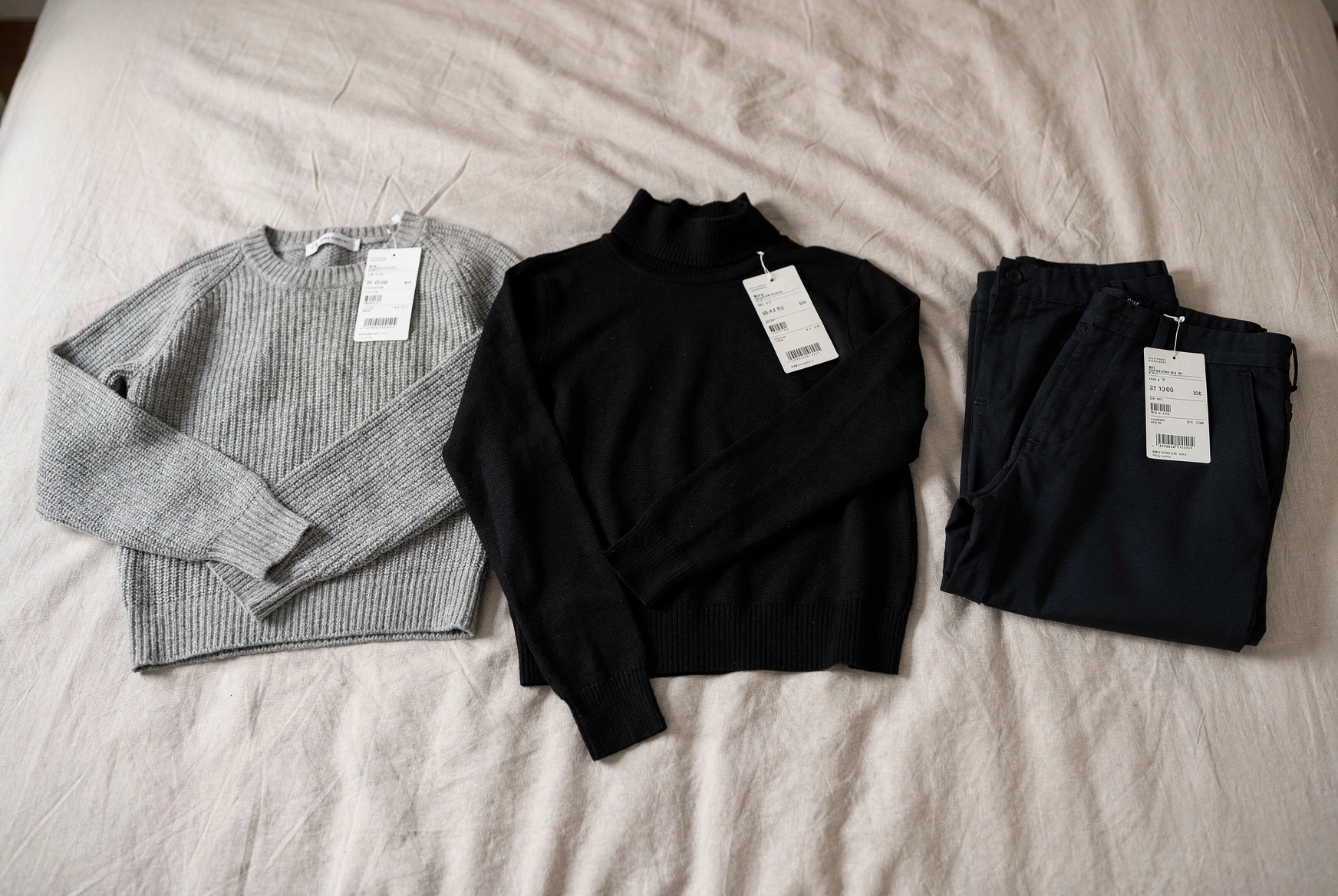
You bought it on sale. The dopamine hit of “50% off” overrode the part of your brain that would have noticed you already own four gray sweaters.
You bought it for your fantasy self. The version of you who goes to gallery openings and needs a black turtleneck. (Spoiler: you went to one gallery opening in 2024 and wore a hoodie.)
You bought it online and it didn’t fit but you never returned it. A study from Narvar found that 63% of consumers consider return policies before purchasing clothing online, but a significant chunk still keep items that don’t fit because the return process feels like a hassle.
The fix is boring but effective: slow down. Before any purchase, run through a quick mental checklist. Do I own something similar? Can I make at least three outfits with this? Does it fit my actual lifestyle? If you’re shopping online, Clottr’s “Should I Buy?” feature automates this, it checks a new item against your existing wardrobe and gives you a straight answer. But even without tech, just pausing for 30 seconds before clicking “add to cart” eliminates most regret purchases.
For more on this, I wrote about my own experience breaking the cycle.
Does dressing better have to be expensive?
No. And I’d actually argue that spending more often makes things worse, because expensive mistakes hurt more and people hold onto them longer to justify the cost.
The single best money tip I can give: prioritize fit over everything else. A 20,00 EUR Uniqlo t-shirt that fits you perfectly will outperform a 150,00EUR designer piece that’s too big in the shoulders. I’ve tested this. Multiple times. Nobody has ever asked me how much my well-fitting 20,00 EUR t-shirt cost, but I’ve gotten “nice shirt” on it more than once.
Beyond fit: learn basic garment care. Wash on cold, hang dry when you can, don’t wash things after every single wear (jeans especially - the CEO of Levi’s famously said he never washes his). Your clothes will last longer and look better. This isn’t precious fashion advice. It’s basic textile science, heat and agitation break down fibers.
And seriously, look into secondhand. I used to be a thrift-store skeptic until I forced myself to try it. Consignment shops, resale apps, even Facebook Marketplace. The stigma around secondhand clothing is basically gone, the secondhand market is projected to reach $350 billion globally by 2028.
Forget “body type” charts - focus on proportion
I have a hot take here: the entire “dress for your body type” industry is mostly nonsense (again, slice of bread from Buzzfeed). Those charts that categorize people as apples, pears, rectangles, and inverted triangles? They’re reductive, often gendered in weird ways, and the advice they give is usually “hide the parts of your body we’ve decided are wrong.”
That’s a terrible framework.
What actually matters is proportion and balance. If you’re broad-shouldered, you don’t need to “balance” with wide-leg pants, you just need to make sure your top half and bottom half look like they belong to the same person. If you’re shorter, a higher rise on your pants can visually lengthen your legs. If you carry weight in your midsection, structured fabrics drape better than clingy ones.
None of this requires a body-type quiz. It requires a mirror. This is actually why we don’t even ask your body type when using the Clottr app. It’s useless and doesn’t really make outfits better / more likable.
The real cheat code, though? Tailoring. Getting pants hemmed costs 10-15 EUR. Taking in a shirt at the waist runs 15-20 EUR. I started getting some pairs of pants hemmed about three years ago and the difference is absurd. They look custom. For fifteen bucks.
What’s the fastest way to get dressed in the morning?
Three approaches, pick one:
Night-before. Spend 2 minutes before bed picking tomorrow’s outfit. Your evening brain is better at this than your 7 AM brain. I did this maybe 60% of the time and it cut my morning routine in half.
Uniform rotation. Have 3-4 go-to outfit “formulas” and cycle through them. Mine are still the blue jeans and white shirts, which is boring, but effective when running late for the tram. I don’t wear these every day, but when I’m tired or running late, they work.
Weather-first. Check the forecast, eliminate everything that doesn’t make sense for the temperature, and pick from what’s left. Constraints make decisions easier, suddenly you’re choosing between 5 options instead of 50.
If you want to go further, Clottr’s outfit planner does all three of these at once, it looks at your wardrobe, the weather, and your calendar, then suggests something. I find it most useful on Monday mornings or after a night of a bit more drinking.
Seasonal transitions without buying a whole new wardrobe
Layering. That’s it. That’s the section.
The trick is thinking in three layers: a base (tee or thin button-down), a mid layer (sweater, cardigan, flannel), and an outer layer (jacket or coat). In summer you wear the base alone. In winter you stack all three. In spring and fall you mix base + mid and carry the outer layer.
The items that earn their keep during transitions: a lightweight jacket you can throw on or tie around your waist (denim, bomber, or a shirt jacket), a mid-weight sweater that works on its own or under a coat, and at least one waterproof outer layer.
I used to buy “spring clothes” and “fall clothes” as separate categories. Waste of money, don’t do that. Almost everything in your wardrobe should work across at least two seasons if you layer intelligently.
Accessories: the one-piece rule
I over-accessorized for a few months in 2022 after reading too many “level up your style” articles. Bracelets, rings, chains, a watch, all at once. I looked like I was cosplaying a pirate (especially with my longer beard).
The correction was simple: one notable accessory per outfit. A watch OR a bracelet. A chain OR a ring. Not everything at once. (My go to is a watch, love em).
A clean, simple watch is the easiest win. Doesn’t need to be expensive, Casio, Timex, and Seiko all make great options under 100,00 EUR. It just needs to match your general vibe.
Your bag also counts as an accessory whether you think about it or not. A beat-up JanSport from college undermines even a great outfit. Something clean in leather, canvas, or nylon ties things together.
And sunglasses, find a shape that works for your face and stop experimenting. Classic frames (wayfarer, aviator, round) don’t go out of style for a reason.
The one thing to do right now
If you’ve read this far and feel overwhelmed, just do this: go stand in front of a full-length mirror in what you’re currently wearing.
Look at yourself for 30 seconds. Not a glance, an actual evaluation. Does everything fit? Do the colors work together? Would you feel good walking into a room full of people you wanted to impress?
Most people never do this. They glance, confirm nothing is catastrophically wrong, and leave. Starting to actually look, even briefly - is the single fastest way to start dressing better.
It’s free. It takes half a minute. And it’s how every well-dressed person you’ve ever admired starts their day.
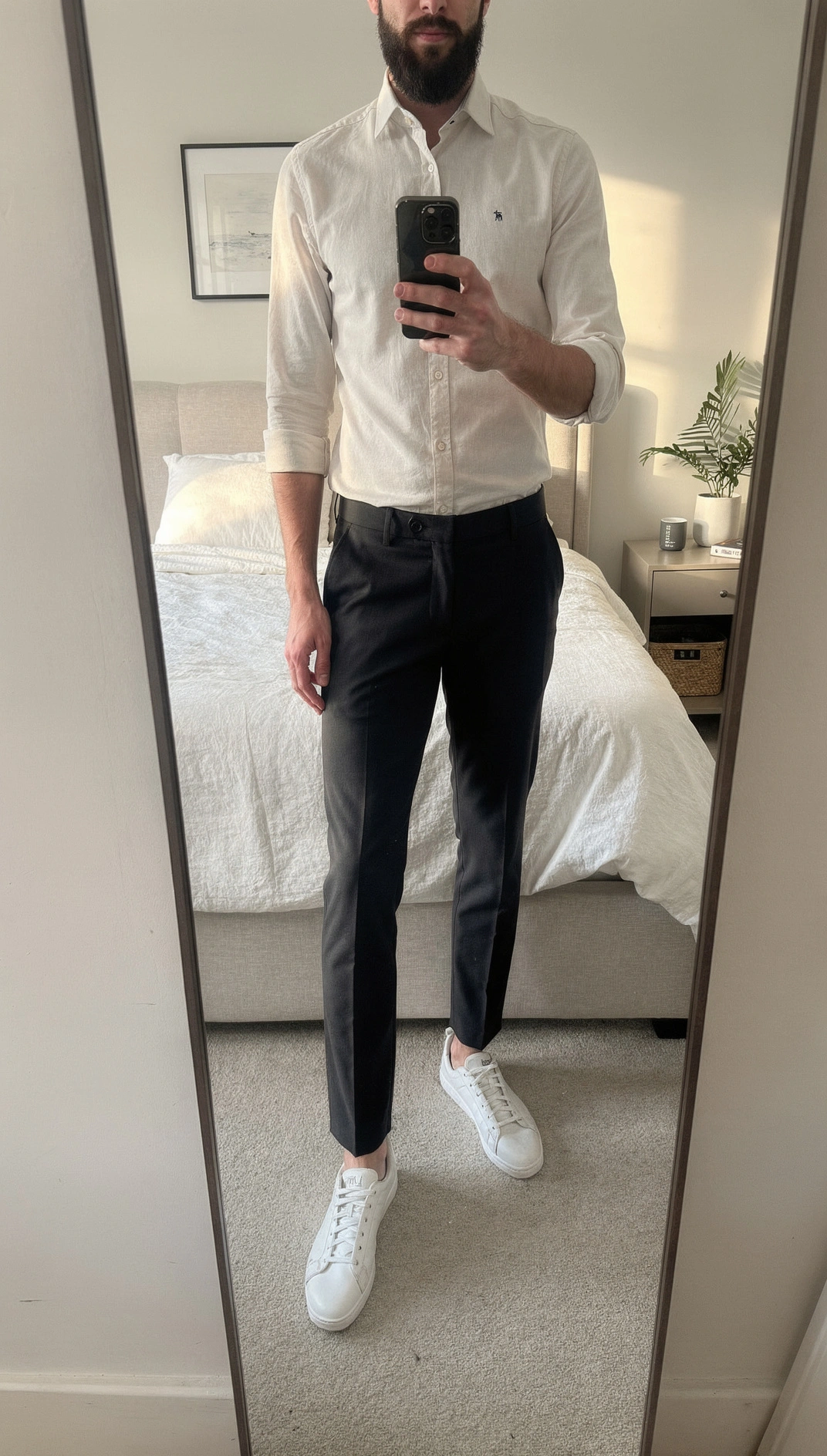
Dressing better isn’t about rules or money or having the right “body type” (why bread, Buzzfeed, why?). It’s about paying attention. To fit. To color. To how pieces work together. And to what you actually like, not what an algorithm or a magazine tells you to like.
Start small. Get one pair of pants hemmed. Try one new combination this week. Delete one item from your cart that you know you don’t need. The compound effect of these small decisions is how you go from “I have nothing to wear” to enjoying getting dressed.
That’s the whole secret, really. There isn’t a shortcut. But there also isn’t as much to learn as the fashion industry wants you to believe.