Buy with purpose
See exactly what
your wardrobe is missing.
Clottr measures your closet against the style you're building, then names the few pieces that would actually complete it — and what to skip.
Get Early Access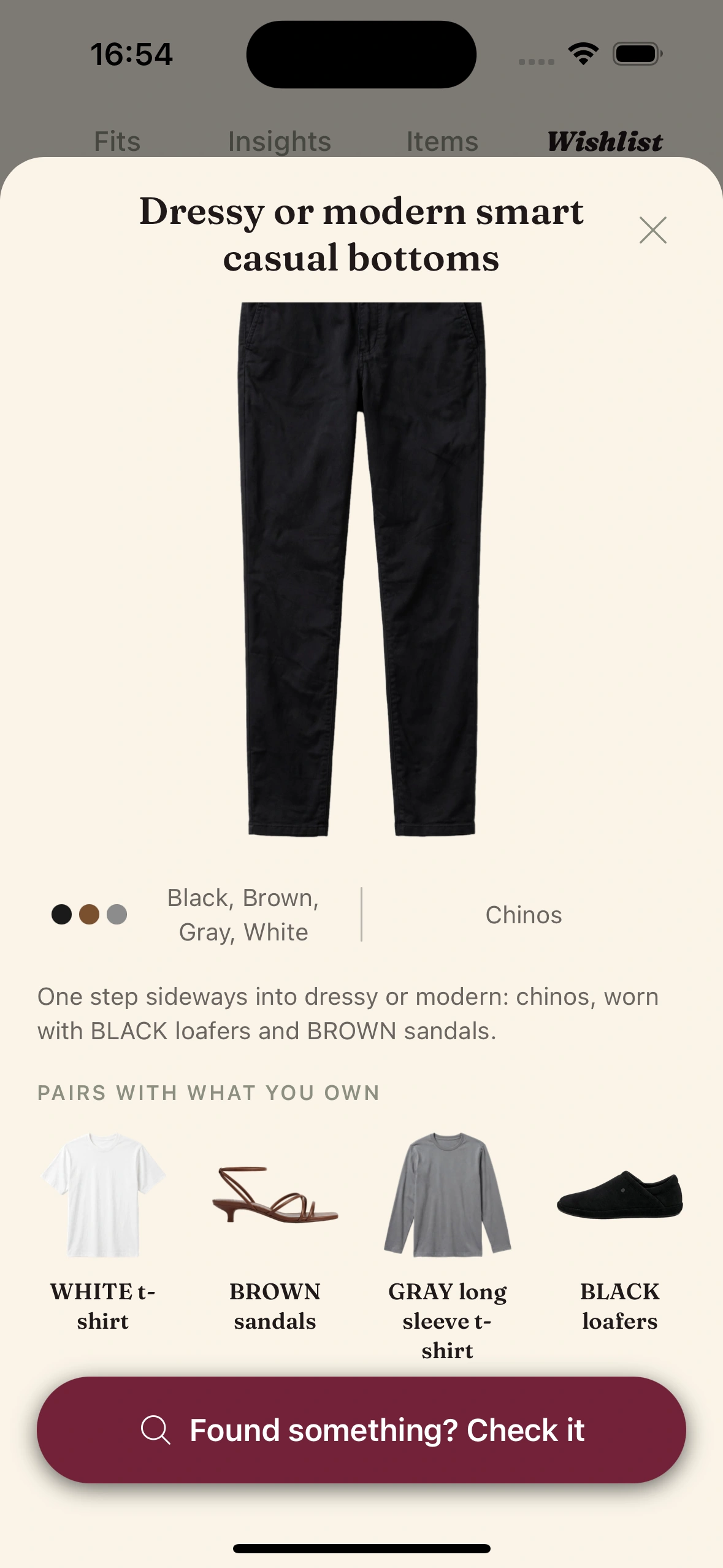
From 'I need clothes' to a precise shortlist
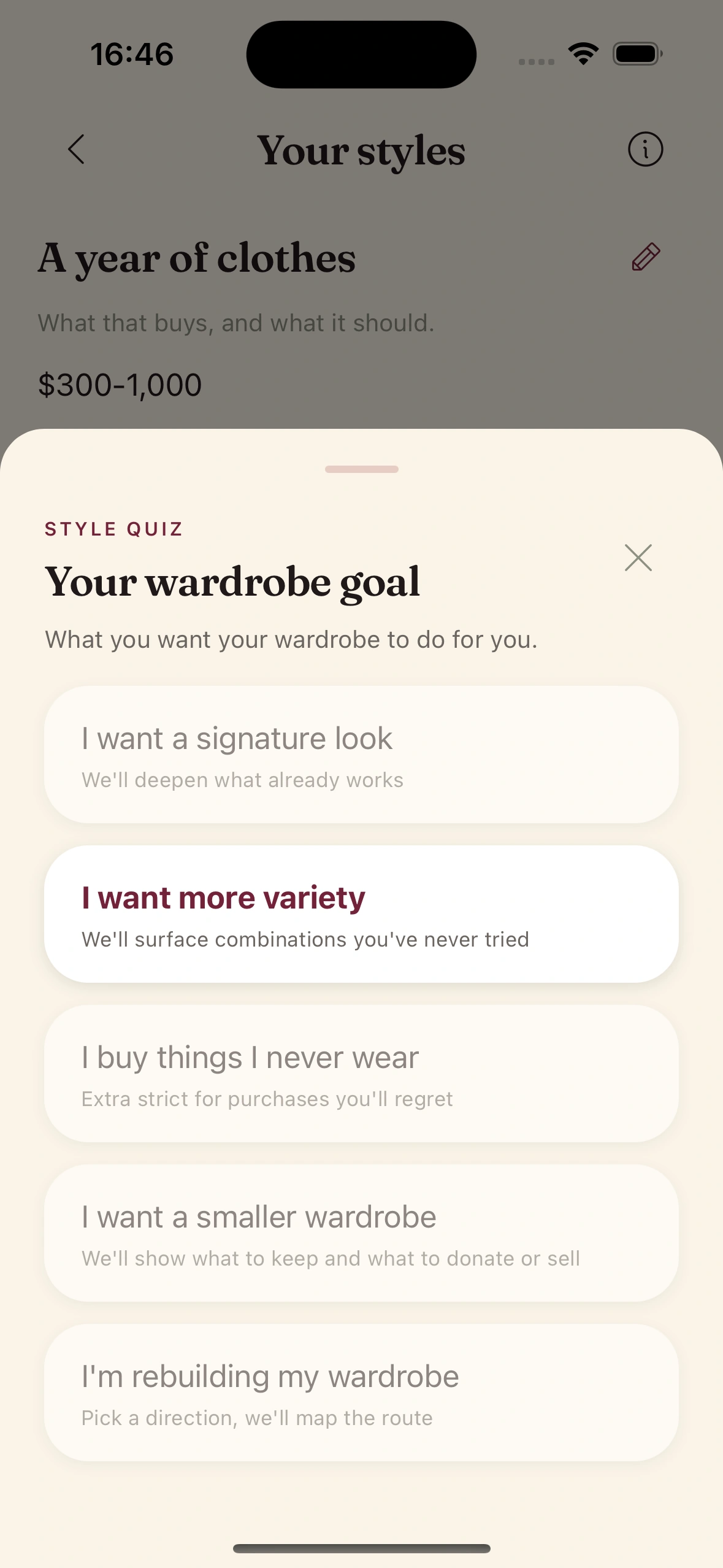
Set a style goal
Tell Clottr the wardrobe you're building toward — quiet minimalist, tailored workwear, a proper capsule. It reads that goal alongside your Style DNA: formality range, color leanings, fabric tolerances, the occasions you actually dress for.
See your gaps mapped
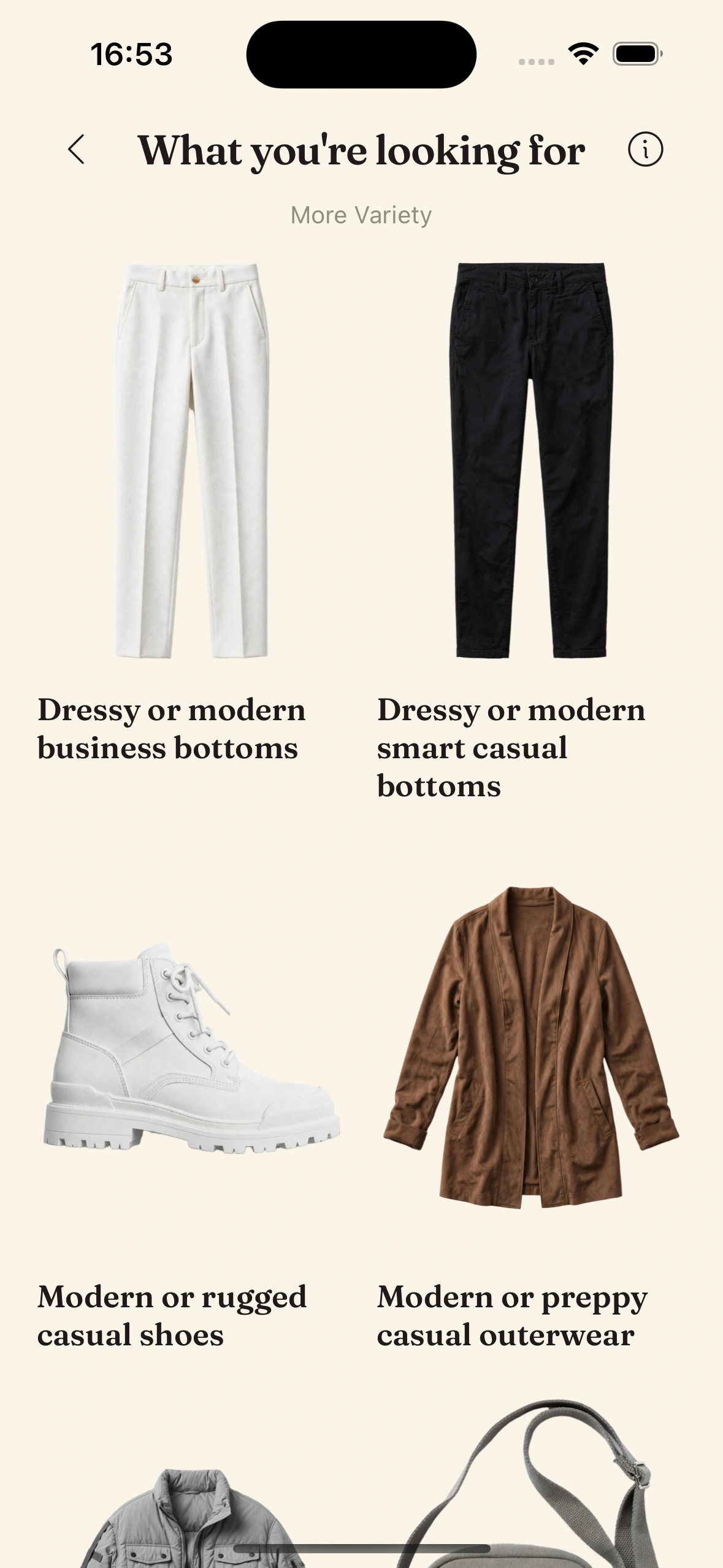
Clottr measures your catalogued closet against that goal and finds where it falls short — the mid-weight jacket you keep improvising around, the missing neutral trouser, the shoe that half your outfits need. Not a wishlist. A map of what is actually absent.
Shop the directions
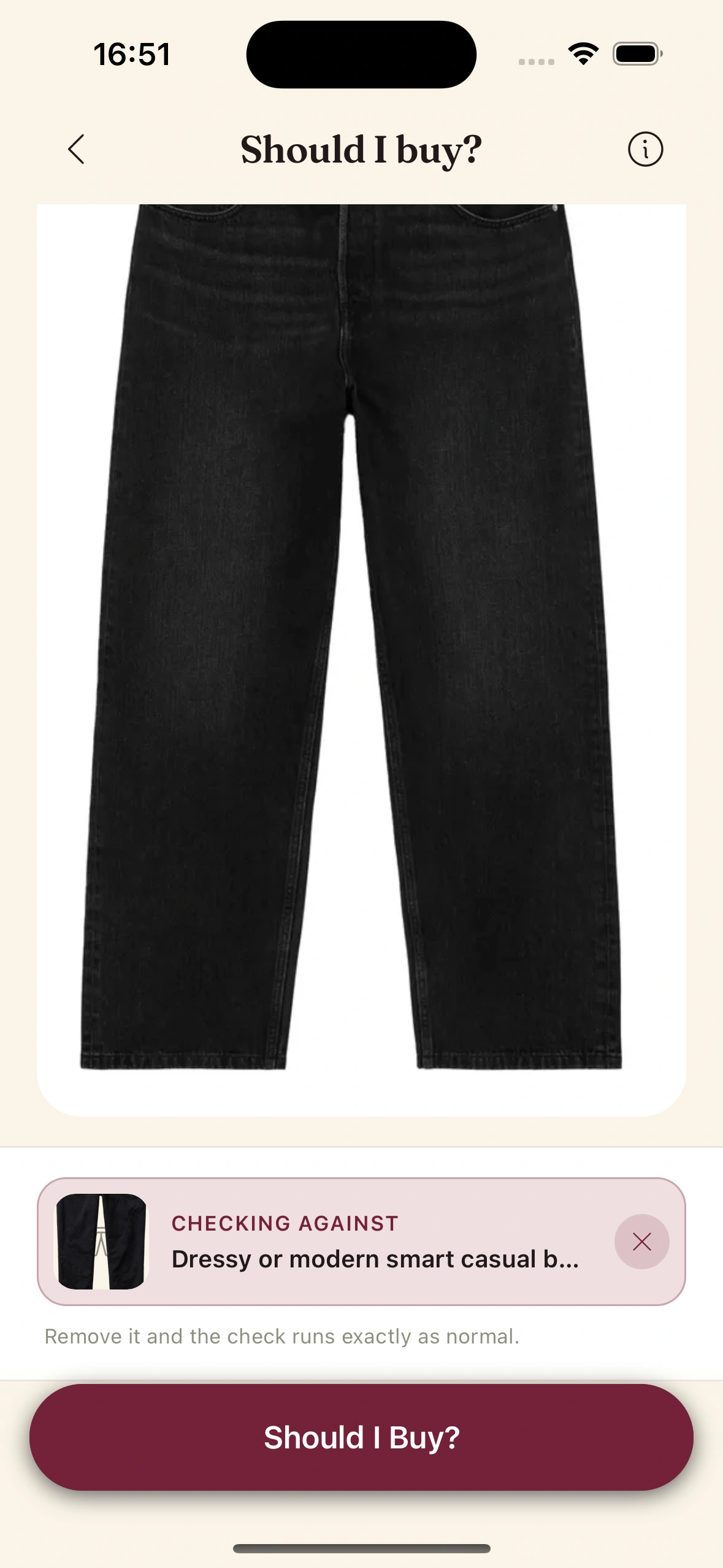
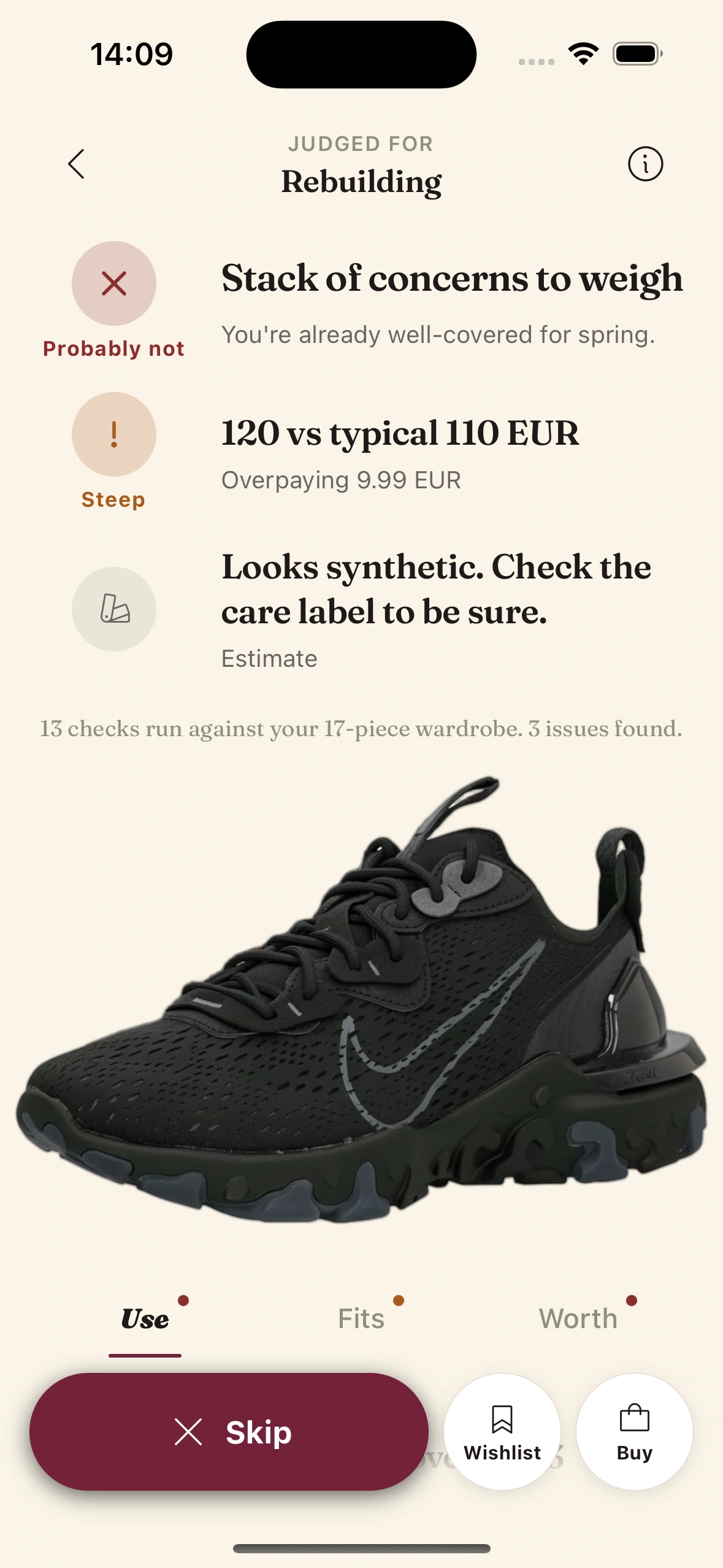
Each gap comes with a direction, not an ad: the category, the color, the weight, the formality that would close it. Bring a candidate you found and Clottr checks it against the gap and the rest of your closet before you spend.
Buy with purpose, not on impulse
Most closets are not too small — they are lopsided. Five versions of the same black knit and nothing that bridges a smart-casual dinner. Gap analysis names that imbalance out loud, so your next purchase does real work instead of deepening a pile you already own.
Every direction is grounded in your goal and your existing pieces, so a gap only counts if closing it unlocks outfits you cannot build today.
- ·A missing formality tier
- ·A color that unlocks combinations
- ·A weight your seasons skip
- ·A shoe half your fits need
Every gap is checked against the clothes you already own
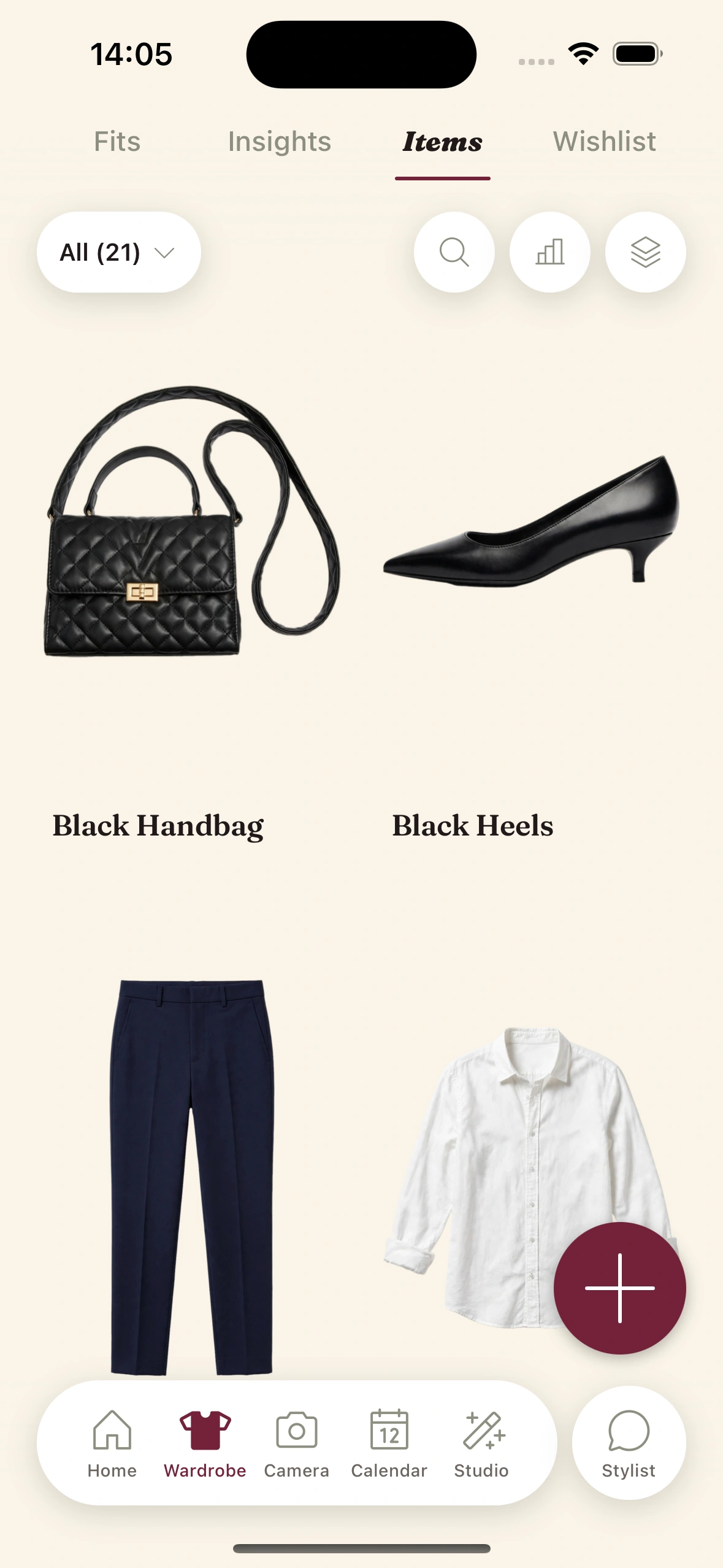
Before Clottr calls something a gap, it looks at what you have. If three pieces already cover a role, it says so — and it will flag a near-duplicate the moment you consider one, the same way Should I Buy compares a candidate against your whole wardrobe.
The result is a shortlist you can trust: a handful of specific pieces that finish the wardrobe you're building, and a clear no on the ones that just repeat it.
Frequently Asked Questions
What is a wardrobe gap analysis?
A wardrobe gap analysis measures the clothes you own against the style you're building toward and identifies what's genuinely missing. Clottr looks at your catalogued closet, your Style DNA, and your style goal, then surfaces the specific categories, colors, and weights that would complete it — instead of a generic shopping list.
What should I buy for my wardrobe?
Clottr turns that question into a precise shortlist. It finds the roles your closet cannot fill today — a mid-weight jacket, a neutral trouser, a versatile shoe — and gives each one a direction: category, color, formality, and season. You buy the few pieces that unlock the most outfits, and skip the rest.
How do I find the missing pieces in my capsule wardrobe?
Set your capsule as the style goal and Clottr maps your current pieces against it. A capsule lives or dies on coverage, so it flags where combinations break down — the layer that's absent, the color that isn't bridging, the formality tier you keep improvising around — and shows the smallest set of additions that make the capsule work.
Will Clottr just tell me to buy more clothes?
No. Clottr earns no commission on anything you buy, so it has no reason to inflate the list. A gap only counts if closing it unlocks outfits you can't build today, and if a piece already covers a role, Clottr tells you to keep it and move on. Often the honest answer is that your closet is more complete than it feels.
How is gap analysis different from Should I Buy?
They work as a pair. Gap analysis is proactive — it tells you what your wardrobe is missing before you shop. Should I Buy is reactive — you bring a specific candidate and it delivers a verdict, checking the item against your closet and cost-per-wear. Gaps point you in a direction; Should I Buy vets the piece you found there.
Explore more
Should I Buy
Bring a candidate piece and get a plain-English verdict against your whole closet.
Digital Wardrobe
Catalog your closet so Clottr can measure it against the style you want.
AI Outfit Planner
Turn a completed wardrobe into daily outfits, scored on seven style dimensions.
Wardrobe Insights
See your closet by the numbers — palette, cost-per-wear, most and least worn.