


Wardrobe rules
Wardrobe formulas, explained
Wardrobe formulas are simple counting rules, like the 3-3-3 rule's 3 tops, 3 bottoms and 3 pairs of shoes. They work because they cap decisions, not style: with fewer options, getting dressed is quicker and you see which pieces actually combine.
This page explains how to use a formula, then answers the question underneath all of them: how many clothes do you actually need? The short answer is that it depends on your laundry cycle and your life, not on a magic number. The 3-3-3 rule has its own page, with an example capsule and the places it fails.
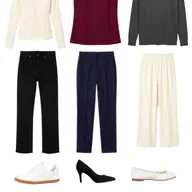
A formula is an audit tool, not a law
Every wardrobe formula is a counting rule: so many tops, so many bottoms, so many shoes. Treat the number as a lens, not a law. Hold your closet up against it and two things show quickly: the categories you're missing and the ones you're over-serving.
Say a formula asks for three pairs of shoes that work with everything, and you can only find one. That's a gap worth filling before you buy another top. Or say it asks for three bottoms, and you own, for example, a dozen pairs of black trousers. That's not a gap, that's a pattern, and the next black pair can wait.
The formula doesn't decide for you. It turns a vague feeling ("I have nothing to wear") into a question you can answer: nothing to wear with what?
If you'd rather have the gaps named for you, Shop My Gaps lists the categories, colors, weights and formality your closet is missing, based on your style goal and Style DNA.
How many clothes do I actually need?
It depends on your laundry cycle and your life, not on a magic number. The right count gets you from one wash to the next without running out, with a little slack.
The formula: days between laundry times outfits per day, plus a buffer, worked out per category. If you wash once a week and wear one top a day, that's seven tops, plus two or three spares for the days you change after the gym or spill coffee. Bottoms, knits and outerwear take more than one wear between washes, so they need fewer pieces than tops.
Your life sets the rest. A job with a dress code adds a work category, a gym habit adds workout sets, and a climate with real seasons adds weather-specific pieces. In the table, minimal is the formula with a small buffer, typical adds room for separate work and weekend clothes, and generous is variety for its own sake. These are general starting points for one season with laundry about once a week, not research: adjust each line to your own week.
And whatever you own, you may wear only part of it regularly. Many people find the same favorites come back week after week while the rest waits. So the number that matters isn't how much you own but how much you wear, and that one you can measure.
| Category | Minimal | Typical | Generous | What sets your number |
|---|---|---|---|---|
| Tops | 9-10 | 12-15 | 20-25 | Days between washes times tops a day, plus 2-3 spares |
| Bottoms | 3-4 | 5-7 | 8-12 | How many wears each pair takes before a wash |
| Dresses or suits | 1-2 | 3-5 | 6-8 | How many days a week you dress up for work or events |
| Outerwear | 1 | 2-3 | 4-5 | Your climate: rain, cold and how fast the weather turns |
| Shoes (pairs) | 3 | 4-6 | 8-10 | Casual, smart, weather and sport, then your dress code |
| Workout sets | 2 | 3-4 | 5-7 | Workouts between washes, plus 1 |
Example: you do laundry every seven days, wear one top a day, wear each bottom about three times before washing it and work out once a week. Tops: 7 plus 2 spares makes 9. Bottoms: 3 for the week plus 1 spare makes 4. Workout sets: 1 plus 1 makes 2. That's the Minimal column. Add more workouts or separate work clothes and your numbers move toward Typical.
See your own numbers in Clottr
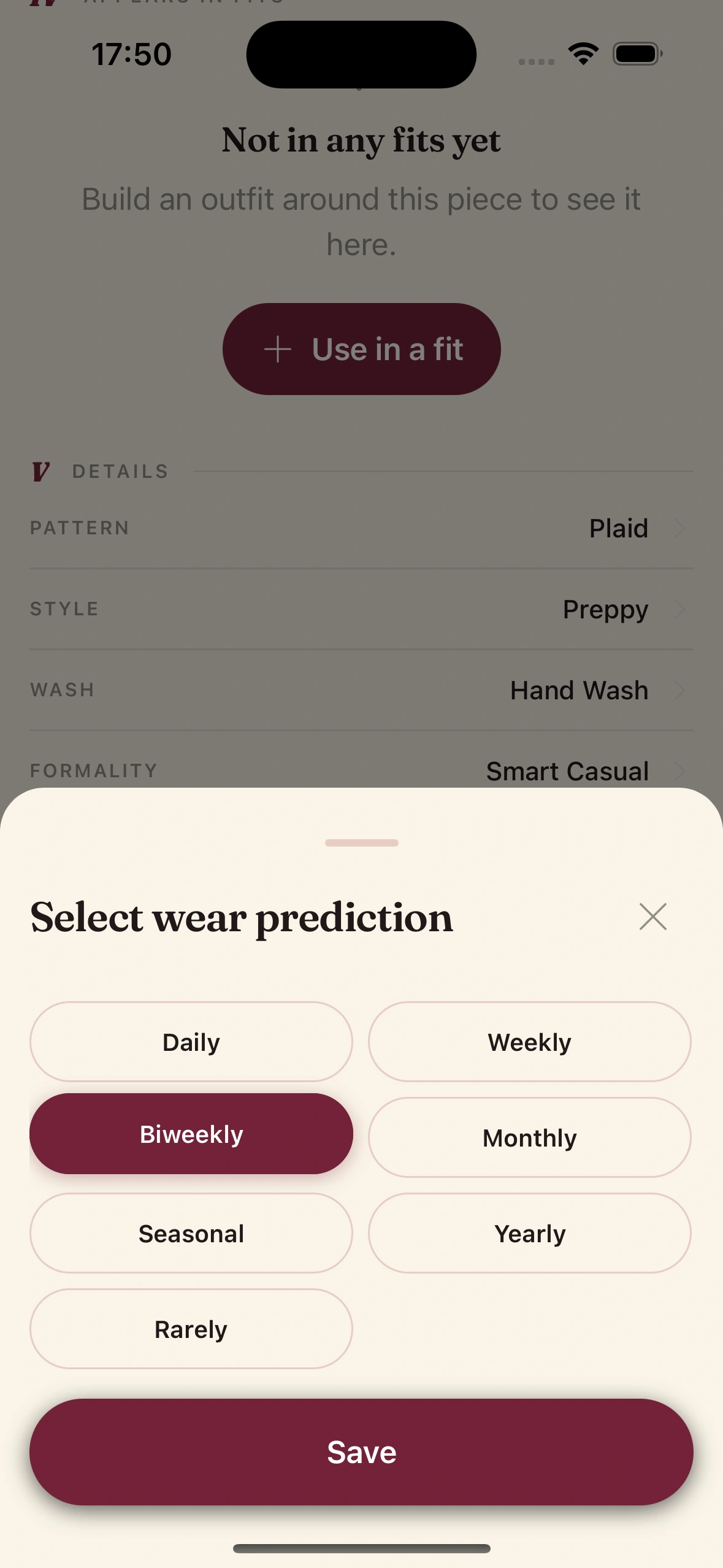
A table gives you a starting point. Your own wear history gives you the answer. Wardrobe Insights tracks what you wear from the daily fits you tap, events on a connected calendar, wears you log by hand, and a predicted wear frequency you can set per piece. Over a few weeks it shows which pieces you reach for and which ones sit out. A predicted frequency is your own estimate, not a recorded wear, so log the pieces you want exact counts for.
Deep Cuts works from the other end: it surfaces pieces you haven't worn lately that suit today, so a forgotten piece gets a second chance before you decide it has to go. Cost-per-wear on each item shows which purchases earn their place.
To hold your closet up against the table, filter your digital wardrobe by category, then by formality and color.
Do it in Clottr
- 01
Import your closet
Photograph pieces one at a time or a whole rack at once, or import product images from any online store. Clottr removes the background and tags each piece. About 30 items is enough to start, and the wardrobe import guide walks you through it.
- 02
Let wear tracking run
Tap the daily fits you wear, connect your calendar or log a wear by hand. For pieces you'd rather not log, set a predicted wear frequency and Clottr keeps track of the likely wears for you.
- 03
Read your Insights
After a few weeks, open Wardrobe Insights for your wear history, cost-per-wear and Deep Cuts. The Insights guide explains each part.
Wardrobe rules questions
Which wardrobe rule suits a minimalist or a traveler?
A small, fixed count you can repeat. The 3-3-3 rule (3 tops, 3 bottoms, 3 pairs of shoes) fits both: a minimalist can wear it for a week as a test, and a traveler can pack it for a week away. The principle is the same either way: a few colors that all go together, and every top works with every bottom.
Which wardrobe rule works for a parent or a corporate job?
Size it by your week, not by a challenge. Parents often need a bigger buffer of washable, easy-care everyday pieces, because some days one outfit isn't enough. A corporate job adds a work category: count your office days between washes and build that part around the dress code. A small challenge like the 3-3-3 rule fits a weekend better than a strict five-day dress code.
Can wardrobe rules work with a big closet?
Yes. A rule doesn't mean throwing the rest out. Pick the pieces for one week, put everything else out of sight and notice what you miss. What you reach for, and what you don't miss at all, tells you more than any count.
Do wardrobe rules kill personal style?
No. A formula limits how many pieces you choose from, not which ones. Pick pieces in your own colors and shapes and the result is more personal, not less, because every piece is there on purpose.
How many pairs of jeans do I need?
Usually two or three pairs: a dark wash that can dress up, a lighter or relaxed pair for weekends, and a spare if you wear jeans most days. Jeans take several wears between washes, so you need fewer of them than tops.
How many pairs of shoes do I need?
Start with three to five pairs: everyday sneakers, a smarter pair for work or dinners, one pair for the weather (boots in winter, sandals in summer) and workout shoes if you train. Add pairs for a dress code or a hobby, not for variety alone.
How many pieces are in a capsule wardrobe?
There's no official number. A capsule can be as small as the 9 pieces of the 3-3-3 rule for a week, or a few dozen pieces for a whole season. Size yours with the laundry formula on this page instead of chasing a target number.
How often should I declutter my closet?
Do a light check each season, when you swap out clothes for the weather, and a deeper one about once a year. Use wear as the test: if a piece sat out the whole season it was made for, ask why before you keep it.
Keep going
Wardrobe Insights
Wear tracking, cost-per-wear and Deep Cuts for the pieces you own.

Digital Wardrobe
Photograph or import your clothes, and Clottr tags and organizes each piece.

Shop My Gaps
The categories, colors and formality your closet is missing, named for you.

I stopped buying clothes I never wear
How to break the cycle of impulse buys and clothes that never leave the hanger.
See your closet as numbers.
Join early. Discounted for life.