
What to wear on a dinner date
For most dinner dates, wear smart casual: tailored trousers or dark jeans, a proper shirt, fine knit or blouse, and leather shoes or boots. A nicer restaurant adds a blazer, a dress or a long coat; a casual spot lets you keep the sneakers.
The restaurant sets the level, not the word "dinner". Below you'll find a table of restaurant types, what smart casual means on a date, a menswear and a womenswear formula, layers for a long evening and what to check before you leave.
Read the restaurant
Look the place up before you decide: the photos on its website or its reviews show you what other diners wear, and that's your baseline. Then go one notch above it, the same rule as for any first date.
If you're the one who picked the place, tell the other person what kind of place it is. It saves them guessing and is a small kindness that starts the evening well.
| Restaurant | What it looks like | What to wear |
|---|---|---|
| Casual spot | Counter service, pizza, a busy noodle bar | Clean casual: dark jeans, a knit or shirt, clean sneakers or boots |
| Neighborhood bistro | Table service, a short menu, mixed crowd | Smart casual: dark jeans or trousers, a shirt, fine knit or blouse, leather shoes |
| Upscale restaurant | Tablecloths or a stylish room, a wine list | Smart casual at its dressiest: tailored trousers, a blazer, or a dress, polished shoes |
| Fine dining | A tasting menu, a stated dress code | Follow the dress code; without one, a blazer or a dress and leather shoes |
What smart casual means on a date
Smart casual is a range, not a uniform: the tidy side of everyday clothes, without a suit. For a date, it means pieces with some structure and a little polish, worn in a relaxed way.
The trousers or skirt are tailored or dark and clean. The top has a collar, a fine knit or a neat neckline rather than a slogan. The shoes are leather or suede, or very clean minimal sneakers at the casual end. A jacket is optional and often the piece that makes the outfit.
What it isn't: athletic wear, anything ripped or faded, flip-flops, a full suit and tie (too formal for most dates), or an evening dress at a bistro. If you want the full scale, business casual sits just above smart casual and the page shows where the two overlap.
For men
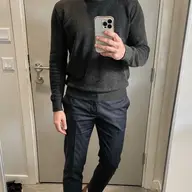
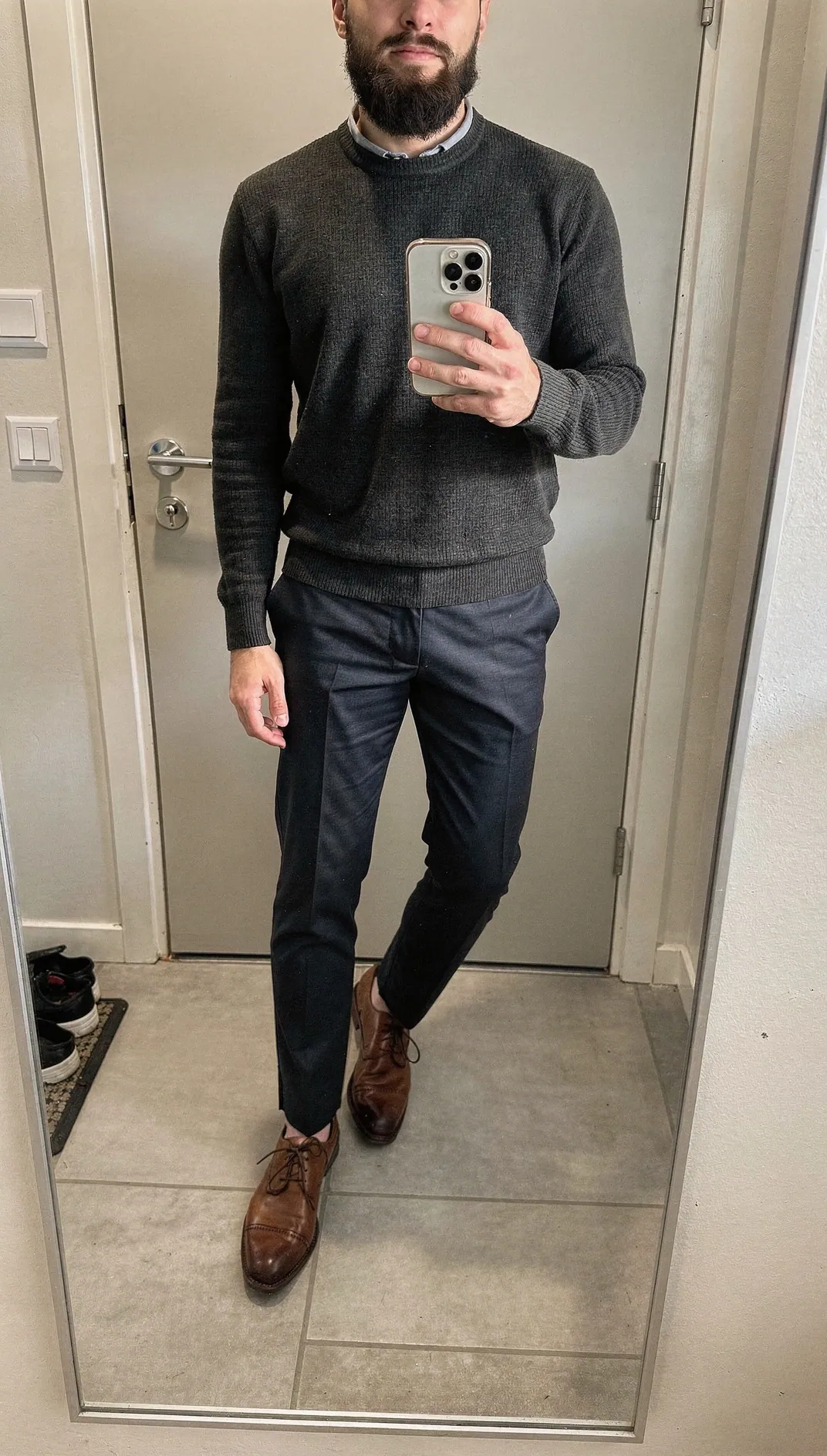
Start with trousers that fit: tailored wool or cotton trousers, or your darkest, plainest jeans with no rips. On top, an ironed shirt in white, light blue or a quiet pattern, or a fine merino knit in a solid color. Leather shoes or boots finish it: loafers, derbies, Chelsea boots.
For a nicer restaurant, add an unstructured blazer in navy, gray or a soft brown. It doesn't need to match the trousers, and it shouldn't: a blazer over jeans or chinos reads as smart casual, a matching suit reads as an office or a wedding.
The usual traps: a shirt you've never ironed, a belt that doesn't go with the shoes, trousers that bunch at the ankle, and the work shirt worn straight from the office with the top button done up. Undo one button, roll the sleeves once if it's warm, and you're dressed for dinner rather than a meeting.
- Tailored trousers or dark jeans
- An ironed shirt or a fine merino knit
- Leather loafers, derbies or Chelsea boots
- Optional: an unstructured blazer
For women
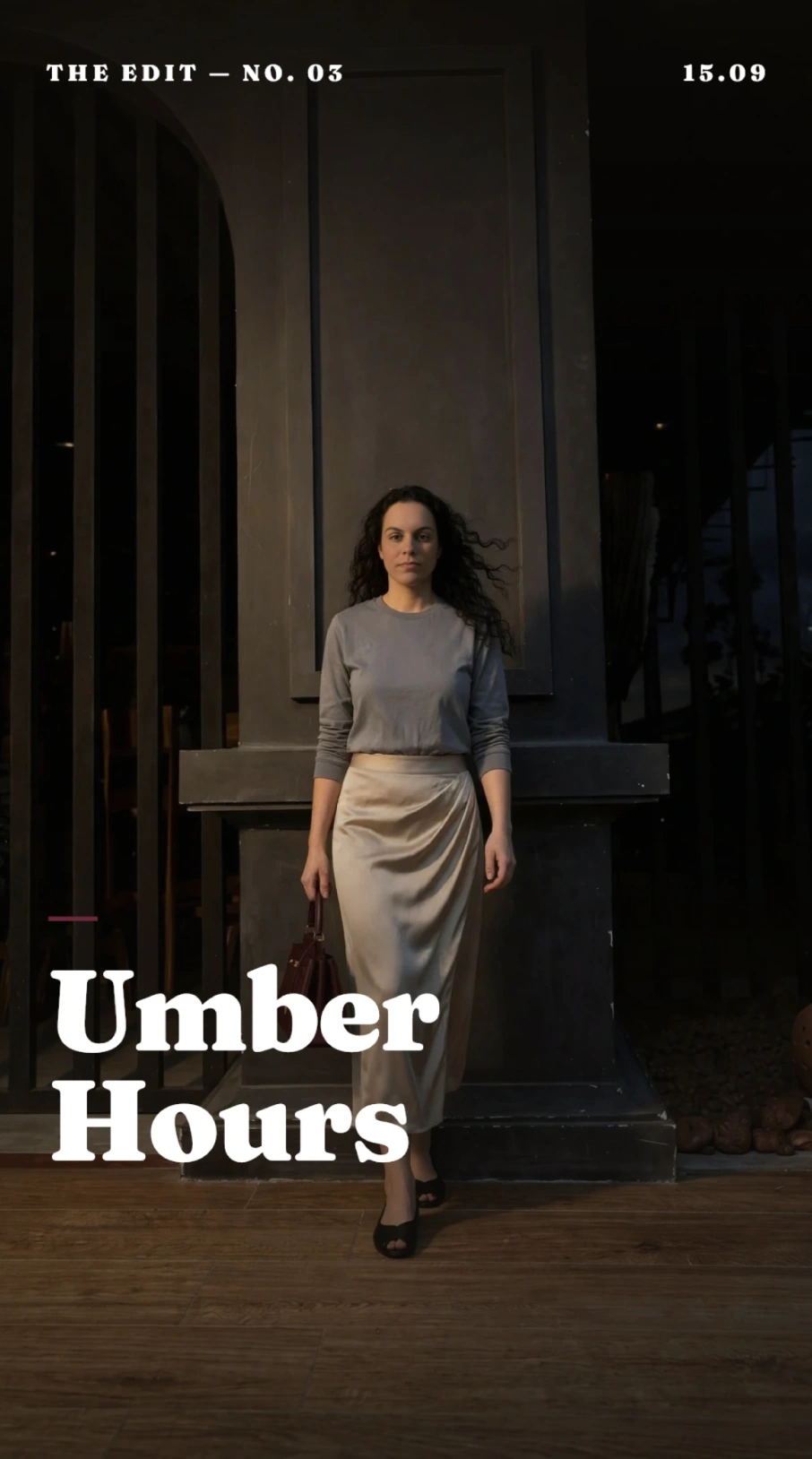
Start from one of two bases: a dress, or trousers with a top. A midi dress in a solid color or a quiet print works in most restaurants; tailored trousers or dark jeans with a silky blouse or a fine knit do the same job and are easier if you'll walk.
Shoes are where comfort and polish meet: block heels, low heels you've worn before, loafers or polished flats. You'll walk in and out, maybe to a second place, so pick a pair you could manage for an hour on a sidewalk. A blazer or a long coat over the top is the simplest way to take the outfit up a notch.
The usual traps: a hemline you can't sit in comfortably, a neckline that needs adjusting every time you lean forward, a bag too big for the table, and heels new enough to hurt by dessert. Sit down in the outfit at home and lean on a table: if anything moves, change it.
- A midi dress, or tailored trousers or dark jeans
- A silky blouse or a fine knit, if not a dress
- Block heels, loafers or polished flats
- Optional: a blazer or a long coat
Layers for a long evening
A dinner date can run three or four hours, and the temperature changes the whole time: the walk there, a warm table by the kitchen, a cold one by the door, a drink outside afterward. Dress for all of it.
The answer is one good layer you're happy to wear and happy to take off: a blazer, a fine cardigan, a light jacket or a long coat. Check that the outfit under it works on its own, because that's what you'll be wearing at the table.
Fabric helps more than people think. Wool and merino stay comfortable across a wider range of temperatures than synthetics, and a shirt or top in cotton or silk breathes better than one in polyester.
Before you leave
Five minutes the night before saves a rushed hour on the night. Lay the whole outfit out, including shoes and the layer, and check it in daylight.
- Everything is clean, ironed and has all its buttons.
- You've sat down in it and nothing pulls or rides up.
- The shoes are ones you've walked in for more than ten minutes.
- The layer works with the outfit and you can carry it.
- The colors work together in daylight, not just under your bedroom light.
Plan it in Clottr
Add the dinner to your calendar and Daily Fit takes it into account when it picks that day's outfit from your closet, matched to the forecast. You can also plan the outfit for that evening yourself in the Calendar, or ask the AI stylist for a dinner-date outfit at a specific kind of restaurant.
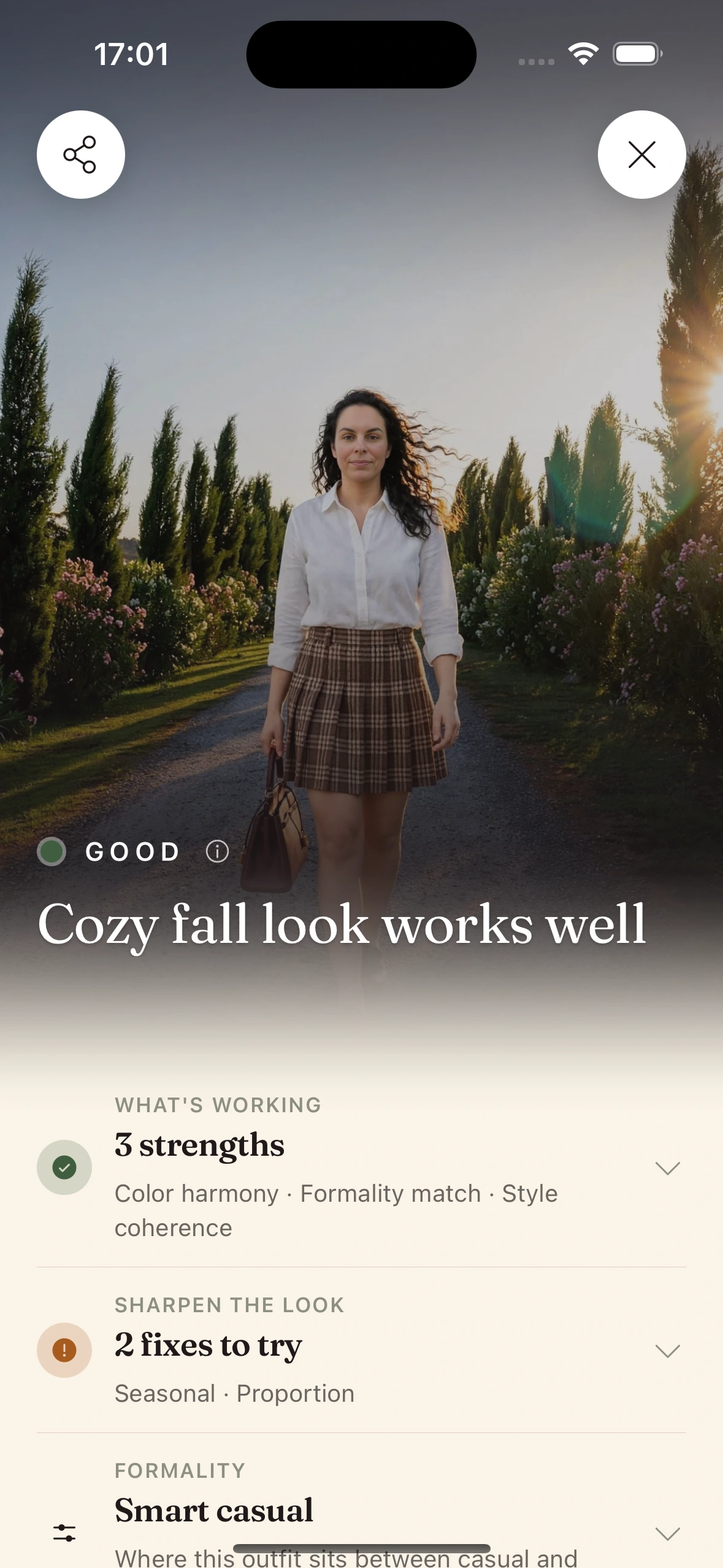
Before the night, try the outfit on your own photo to check the colors and proportions together, and run it through Rate My Outfit: formality match and occasion fit are two of its seven dimensions. The full walkthrough is in dress for a date with Clottr.
Try-on is an approximation for judging the look, not the fit: it doesn't tell you your size or exactly how a garment will fit.
Let Clottr build it from your closet
Clottr reads the occasion and weather, assembles an appropriate outfit from clothes you already own, and shows it on you before you leave the house.
Frequently Asked Questions
Can I wear jeans on a dinner date?
Yes, at most restaurants. Choose your darkest, plainest pair with no rips, and dress the rest up: a proper shirt, a fine knit or a blouse, leather shoes, maybe a blazer. At fine dining with a stated dress code, check it first.
What does smart casual mean for a dinner date?
The tidy side of everyday clothes, without a suit: tailored trousers or dark jeans, a shirt, fine knit or blouse, and leather shoes or very clean minimal sneakers. A blazer is optional and often the piece that makes the outfit.
Should a woman wear a dress on a dinner date?
Only if she wants to. A midi dress works in most restaurants, and so do tailored trousers or dark jeans with a silky blouse or a fine knit. Pick whichever you feel more like yourself in and can sit and walk in comfortably.
Does a man need a blazer for a dinner date?
No, but it helps at a nicer restaurant. A shirt or fine knit with tailored trousers is enough for most places. An unstructured blazer that doesn't match the trousers takes the outfit up a notch without looking like a suit.
What shoes should I wear to a dinner date?
Leather or suede shoes you've already walked in: loafers, derbies, Chelsea boots, block heels or polished flats. Very clean minimal sneakers work at a casual spot. Skip anything new, and anything you couldn't walk in for an hour.
What should I wear to a dinner date in winter?
A fine knit or shirt under a good coat, wool trousers or dark jeans (or a knit dress with tights), and leather boots. Wool layers handle the change from a cold street to a warm restaurant better than a thick sweater you'd be too hot in at the table.
Get dressed for the date, from your closet.
Join early. Discounted for life.