


What to wear to a wedding as a guest
Are you already dressed for a wedding? Check if it works below.
How it works
- Add a photo
- We read the look
- Get the verdict
What we look at
- Colours
- How the shades work together.
- Fit
- Whether the cuts and silhouettes work together.
- Proportions
- The balance between top and bottom halves.
- Shoes
- Whether they match the formality of the rest.
- Overall
- Whether the look holds together as one outfit.
Adults only, clothes on, your own photo. Terms
Start with the invitation: the dress code, the venue and the time of day decide most of the outfit. Then follow three rules that hold almost everywhere: don't wear white, don't outshine the wedding party, and dress for the ground and the weather as much as for the photos.
Below you'll find every common dress code from white tie to casual in one table, what changes between day and evening, the colors and customs that differ between cultures, shoes for a long day, and how to build the look from clothes you already own.
Wedding dress codes, decoded
Most invitations use one of the dress codes below, listed from most to least formal. If the invitation names none, the venue and the time decide: an evening reception in a hotel ballroom implies cocktail at least, and a midday ceremony in a barn or a garden implies something closer to dressy casual. The couple's wedding website often answers the question, and if it doesn't, asking them is fine.
| Dress code | What it means | Example outfits |
|---|---|---|
| White tie | The most formal dress code there is, for evening events. Rare at weddings. | A tailcoat with a white bow tie and waistcoat, or a floor-length evening gown |
| Black tie | Formal evening wear, traditionally for events that begin in the evening. | A tuxedo with a black bow tie, or a floor-length gown or a very dressy cocktail dress |
| Black tie optional or formal | Black tie is welcome but not required. | A tuxedo or a dark suit and tie, or a long dress, an elegant cocktail dress or dressy separates |
| Cocktail or semi-formal | The most common wedding dress code: dressy, but not floor-length. | A suit with or without a tie, or a knee-length or midi dress, a jumpsuit or tailored separates |
| Dressy casual or smart casual | A step below cocktail, common for daytime and smaller weddings. | Chinos or tailored pants with a blazer and an open collar, or a summer dress, a skirt with a blouse, or tailored pants |
| Casual | Rare, and still not jeans and sneakers unless the couple says so. | Chinos with a short-sleeve shirt or a knit polo, or a simple day dress or a skirt with a nice top |
| Themed: beach, garden, festive, "wear color" | The couple's own words. Read them literally, then dress for the ground and the weather. | Linen and light fabrics for a beach, block heels or flats for grass, color and pattern where they're invited |
Morning dress is the daytime version. At a formal daytime wedding, especially in the UK, the invitation may ask for morning dress: a morning coat with a waistcoat and striped trousers, or a formal day dress or suit, often with a hat or a fascinator. Black tie is traditionally an evening dress code.
Day or evening, indoors or out
The same dress code shifts with the clock and the setting. Daytime weddings call for lighter colors, lighter fabrics and less shine; evening weddings for darker or richer colors, more structure and, if you like it, some sparkle. An outdoor ceremony adds two practical questions: what will you be standing on, and how hot or cold will it be?
| Setting | Lean toward | Watch out for |
|---|---|---|
| Daytime, outdoors | Light and mid colors in linen, cotton, silk or light wool, and sunglasses for outside (off for the vows) | Hours in the sun, and an evening that can turn cool: bring a layer |
| Daytime, indoors | Mid tones, crisp fabrics and a jacket you're happy to keep on | Air conditioning in summer: bring a light layer |
| Evening, indoors | Darker or richer colors, more structure, satin, velvet or a little shine | A warm room once the dancing starts: wear a jacket you can take off |
| Beach or garden | Breathable fabrics with block heels, wedges, flats or loafers | Stilettos sink into grass and sand, and long hems collect both |
| Church, temple or mosque ceremony | Covered shoulders and knees, or a layer that covers them | Some places of worship expect it, and a light jacket or a scarf solves it |
| Winter or a cold venue | Wool, velvet, tights and a coat that suits the outfit | Outdoor photos: wear a coat you're happy to be photographed in |
On a hot day, choose the fiber first. Polyester absorbs almost no moisture: in the standard tables textile labs use, its moisture regain is about 0.4%, against roughly 8.5% for cotton and 12% for linen (ASTM D1909). Over a long outdoor afternoon, linen, cotton, silk and light wool feel cooler than polyester satin or crepe.
Colors to wear and colors to skip
In most Western weddings, white belongs to the bride, a convention that took hold after Queen Victoria married in a white satin gown in 1840. Skip white, ivory, cream and anything that photographs as white, including very pale pastels and mostly white prints. If the bride is wearing another color, the same courtesy applies to it.
Black, once the color of mourning, is now accepted at most Western evening weddings and many daytime ones. Red, sequins and very bright prints aren't wrong, but they draw attention, so save them for weddings that invite color. If the couple asks guests to wear a color or a palette, wear it: matching guests are part of their photos.
Customs differ between cultures, and the couple's families know them best. Some common ones:
- Chinese weddings: red is the traditional bridal color and a lucky one, so many guests avoid head-to-toe red. White and black are traditionally linked to mourning.
- Hindu and many other South Asian weddings: bright colors and festive fabrics are welcome. White, linked to mourning, and black are usually avoided, and red is often the bride's color.
- Japanese weddings: white is the bride's color. Guests dress formally, often in black brightened with light accessories; black with black accessories reads as funeral wear.
- Nigerian weddings: the couple's families may choose an aso ebi fabric, and guests have outfits made from it to show their support.
- Orthodox Jewish, Muslim and many church weddings: modest dress, with shoulders and knees covered, and sometimes a head covering.
When in doubt, ask. A short message to the couple or a family member ("Is there anything guests should or shouldn't wear?") is a courtesy, not a nuisance, especially when the tradition isn't yours.
Shoes and comfort for a long day
A wedding can mean six hours or more on your feet: the ceremony, drinks, photos, dinner and dancing. Dress for the last hour as well as the first.
Heels are the classic risk. US emergency departments treated an estimated 123,355 injuries from high heels between 2002 and 2012, most of them sprains and strains of the foot and ankle, and the yearly rate nearly doubled over the decade (Moore and colleagues, 2015). Block heels, wedges and dressy flats are kinder on grass, cobbles and dance floors, and a pair of foldable flats in your bag has saved many evenings.
Break in new shoes at home for a few evenings before the day, and choose a bag big enough for blister plasters, your phone and a layer.
Build it from your own closet
Most guests don't need a new outfit. Clothes are worn fewer times than they used to be: the Ellen MacArthur Foundation estimated that the average number of times a garment is worn fell by 36% in 15 years (A New Textiles Economy, 2017). A dress or suit bought for one wedding and never worn again is that number in miniature.
Start with what you own and change one thing. A dark suit becomes cocktail with a tie and polished shoes, or dressy casual with an open collar and loafers. A simple dress moves from day to evening with richer jewelry, a structured bag and heels instead of sandals. A blazer over a silk top and tailored pants covers everything from dressy casual to semi-formal.
If you do buy, buy for the next three occasions, not just this one: a dark suit, a solid-color midi dress or tailored separates you'll wear again.
Several events over one weekend, like welcome drinks, the ceremony and a brunch? Treat it as a trip: the trip planner builds an outfit for each day from your own wardrobe, matched to the plans and the weather, plus one packing list.
Find the look in Clottr
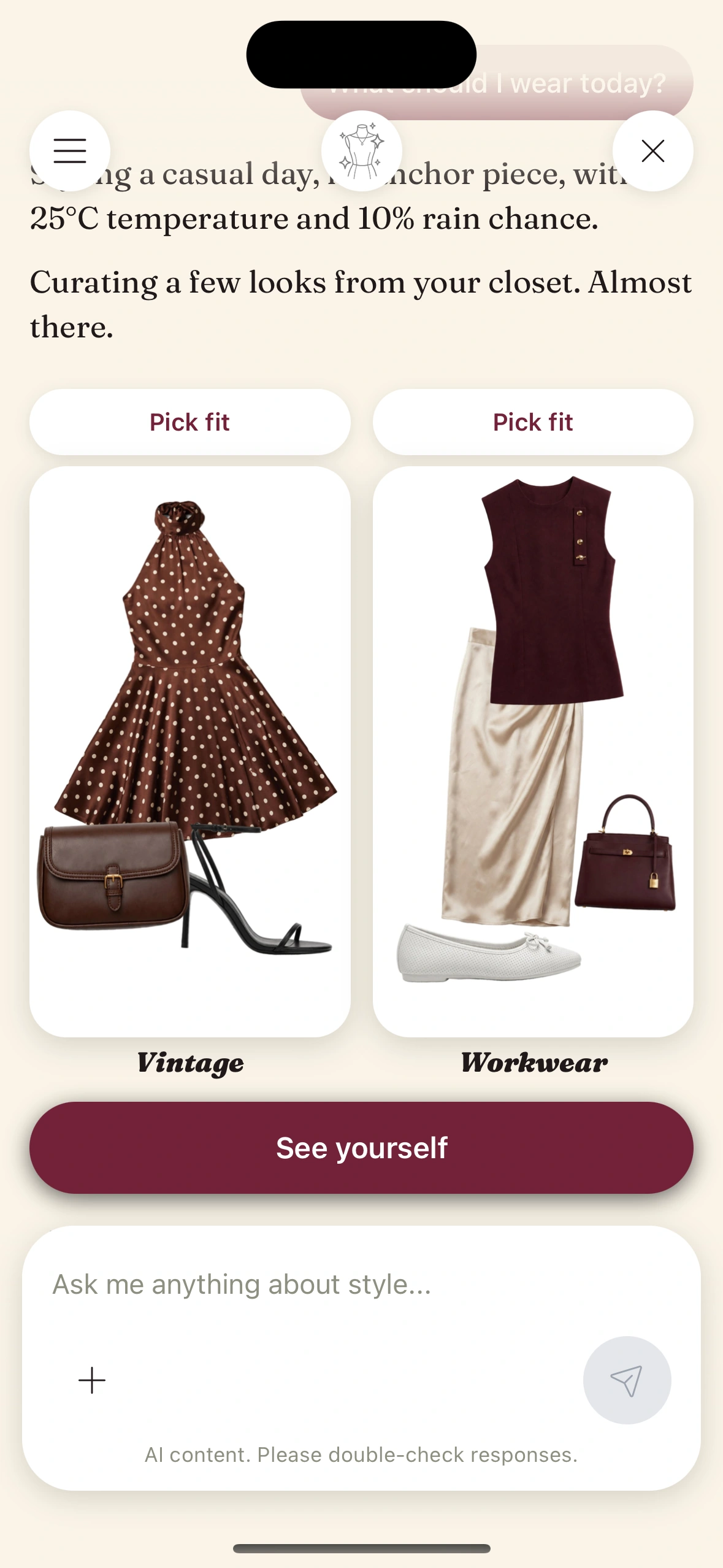
Filter your closet by formality to see what you already own at the invitation's level, then build the look on the canvas. Or ask Clottr's AI stylist for a look for a garden wedding or a black tie evening: it matches the formality, checks the forecast and builds the outfit from pieces you own.
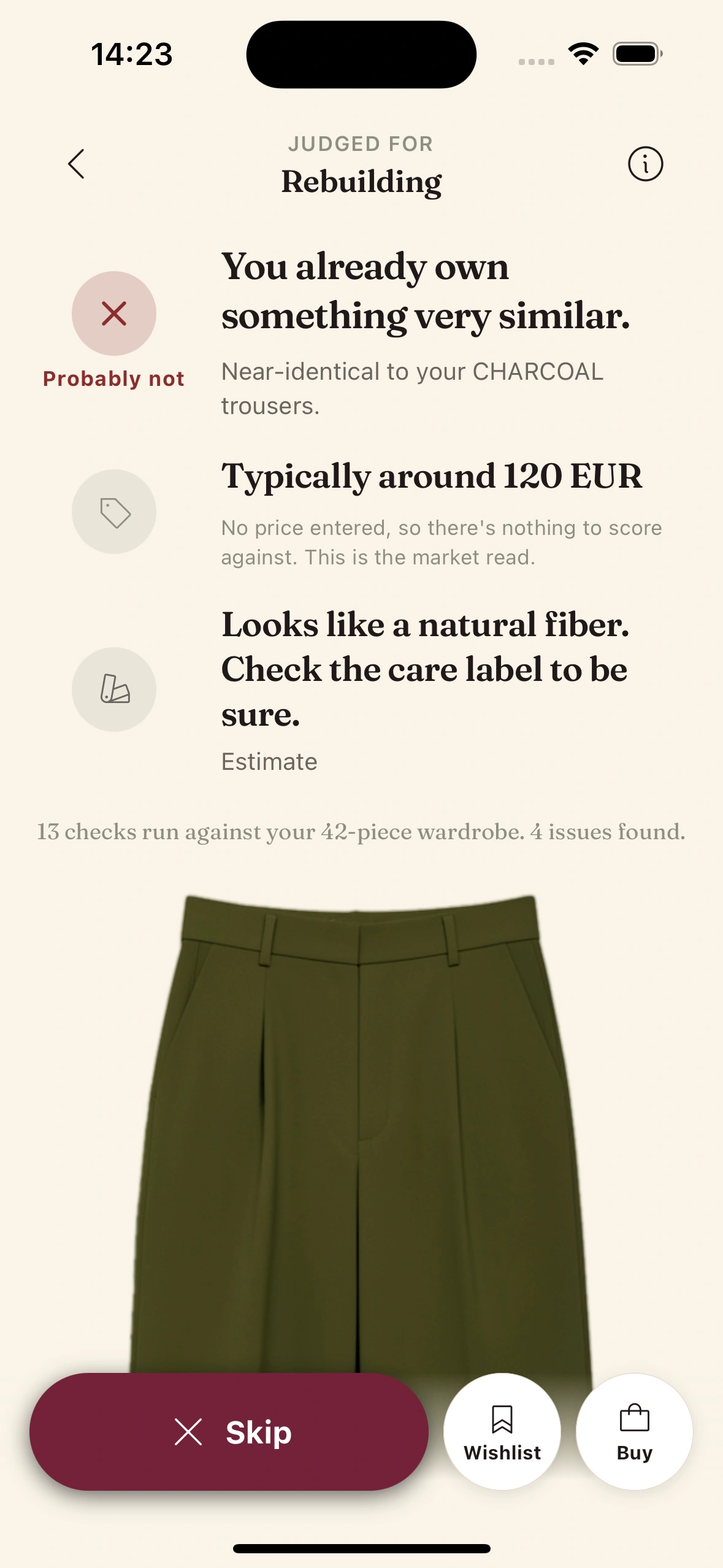
Before you commit, see the whole look on you with virtual try-on, jewelry included: earrings and necklaces render on the same photo you use for clothes. If you're still tempted to buy something new, Should I Buy checks it against your closet first, as in the second screenshot, where it found a near-twin already on the rail.
What it can't do: Clottr doesn't know the couple's customs or what their wedding website says about dress. Check those first, then let the app find the pieces. Clottr is coming soon: join the waitlist for early access.
Sources
Moore, Lambert, Jenkins and McGwin (2015), The Journal of Foot and Ankle Surgery: injuries from high heels treated in US emergency departments, 2002 to 2012.
Ellen MacArthur Foundation (2017), A New Textiles Economy: how often clothes are worn, and how that has changed.
ASTM D1909: the standard commercial moisture regain values for textile fibers.
Let Clottr build it from your closet
Clottr reads the occasion and weather, assembles an appropriate outfit from clothes you already own, and shows it on you before you leave the house.
Frequently Asked Questions
Is there a free tool that rates my outfit?
Yes, on this page: upload a photo and get a verdict in about ten seconds, two a day, no sign-up.
What should I wear to a wedding as a guest?
Follow the dress code on the invitation, then the venue and the time of day. If no dress code is given, cocktail is the safe middle: a suit with or without a tie, or a knee-length or midi dress, a jumpsuit or dressy separates. Skip white and anything that competes with the wedding party.
What does cocktail attire mean for a wedding?
Dressy, but not floor-length: a suit with the tie optional, or a knee-length or midi dress, an elegant jumpsuit or tailored separates. It's the most common wedding dress code and sits between dressy casual and formal.
What does black tie mean for a wedding guest?
Formal evening wear: a tuxedo with a black bow tie, or a floor-length gown or a very dressy cocktail dress. "Black tie optional" means a dark suit and tie, or a long or elegant cocktail dress, is just as welcome.
Can I wear black to a wedding?
At most Western weddings, yes, especially in the evening. At many Chinese and Hindu weddings black is linked to mourning and better avoided, and at Japanese weddings guests often wear black but brighten it with light accessories.
What colors should you not wear to a wedding?
White, ivory, cream and anything that photographs as white, out of respect for the bride. Depending on the culture, also red, the bride's color at many Chinese and Hindu weddings, and colors linked to mourning there. If the couple names a palette, wear it.
Can I wear the same outfit to more than one wedding?
Yes. Change the shoes, the jewelry or a layer and it becomes a different look, and a good wedding outfit deserves more than one outing.
What should I wear to a summer or outdoor wedding?
Light fabrics such as linen, cotton, silk or a light wool in light or mid colors; block heels, wedges, flats or loafers that won't sink into grass; sunglasses for the hours outside, taken off for the vows; and a layer for the evening, when it can turn cool.
How do I figure out what to wear from my own closet?
Filter your closet by formality to see what already fits the dress code, then change one thing to move it up or down: a tie, the shoes, the jewelry or a layer. In Clottr, you can ask the AI stylist for a look for the wedding and see it on you before you commit.
Find the wedding look already in your closet.
Join early. Discounted for life.