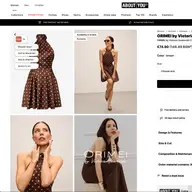


Solid mid-tones in colors that suit you, with one accent at most, photograph best. Navy, olive, rust, burgundy, soft blue, warm gray. Pure white and pure black are the two to be careful with on a phone camera, for reasons that have more to do with the camera than with you.
This matters most for the photos that have to work hardest, like the first photo on a dating profile (the dating style guide covers the rest of that). But it holds for any photo where you’d like the clothes to help, not distract.
Why mid-tones win
A phone camera makes one decision for the whole picture: how bright the scene is. Mid-tones sit comfortably in the middle of that decision. They keep their color in window light, in shade and in the late afternoon, and they don’t pull the camera’s attention, or the viewer’s, away from your face.
Solid colors also do something patterns can’t: they give the eye one calm area next to your face. In a small photo on a phone screen, which is how most of your photos will be seen, calm reads as clear.
What’s hard on a phone camera
Pure white is the brightest thing in most photos. In sunlight or by a bright window, the camera can push it past the point where it holds any detail: the shirt becomes a white shape with no folds, collar or texture, and your face may come out darker to compensate.
Pure black has the opposite problem in dim light. The camera can’t find detail in it, so a black top turns into a flat silhouette, and in a dark bar or room it can merge with the background.
Neither is forbidden. They’re just less forgiving. Off-white, cream, ecru, charcoal and navy do almost the same job with far fewer surprises. If you love white, shoot it in open shade, not in direct sun. If you love black, shoot it in good light against a lighter background.
Small, tight patterns (fine stripes, small checks, tiny houndstooth) can shimmer or ripple on a screen, because the pattern fights with the grid of the camera sensor. Bold, larger patterns are safer than fine ones. In general, keep patterns to one photo of a set, and not the first.
A rough guide by undertone
Undertone is the color beneath the surface of your skin: warm (golden, peachy), cool (pinkish, bluish) or neutral (a mix). People often find that certain colors flatter them because of it. Here’s the common rule of thumb.
| Undertone | Colors that often work | Colors to try carefully |
|---|---|---|
| Warm | Rust, olive, camel, warm red, cream, teal | Icy pastels, stark white |
| Cool | Navy, emerald, berry, cool gray, soft blue | Orange, mustard |
| Neutral | Most mid-tones: soft blue, sage, burgundy, taupe | Very bright neons |
Now the honest caveat: this table is a starting point, not a verdict. Phone cameras and daylight change color far more than the chart accounts for. The same rust shirt looks different by a north window, in afternoon sun and under a warm lamp. And a color you love and feel good in often photographs better than a “correct” color you feel awkward in, because that shows on your face.
If you change one thing, change the light. Soft daylight (facing a window, open shade, the hour before sunset) makes almost every color look like itself. Overhead lights and harsh midday sun make almost every color worse. How to find good light at home is in how to take dating photos by yourself.
For men
The usual trap is the default: a black T-shirt in a dim bar, or a white work shirt in midday sun, which are the two hardest cases above. Swap them for navy, charcoal, olive or a soft blue, which do the same job and keep their detail. Small checks and fine stripes on a shirt are the other trap: they can shimmer on a phone screen, so save them for a full-length photo or skip them.
If you only own neutrals, that’s fine. One mid-tone knit or overshirt near your face, in a color you get compliments in, does more for a headshot than any pattern.
For women
The usual traps are the white dress in bright sun, which loses its detail, and the black dress in a dark restaurant, which turns into a silhouette. Cream, ecru, navy, burgundy or a deep green do the same job with fewer surprises. Small prints have the shimmer problem too, so keep them to one photo, and not the first.
If you want color, put it near your face: a top, a scarf or earrings in a mid-tone that suits you. One accent reads clearly on a small screen; three compete.
Your palette is already in your closet
You probably already know your best colors without a chart: they’re the ones you get compliments in, and the ones your closet leans toward because you keep buying them.
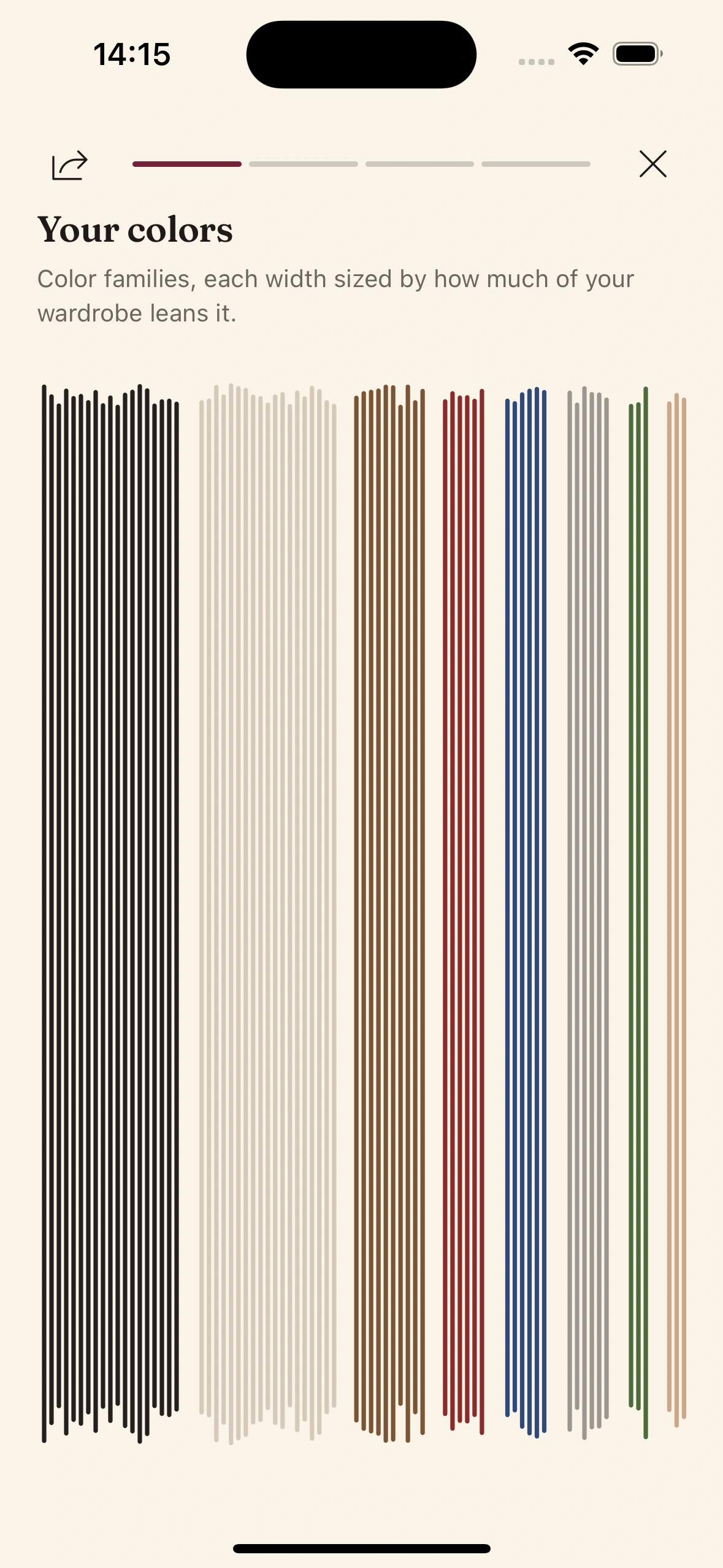
In Clottr, Wardrobe Insights shows your closet’s palette by color family, so you can see what you reach for, and Style DNA records your color leanings. That makes the answer specific to you, not to a table. And try-on renders an outfit on your own photo, so you can compare two tops in two colors on yourself before you take a single real picture.
Frequently asked questions
What color should I wear for pictures?
A solid mid-tone that suits you, like navy, olive, rust, burgundy, soft blue or warm gray, with one accent at most. Mid-tones hold their color in most light and keep the attention on your face.
Is white good for photos?
It can be, but it’s the least forgiving color on a phone camera: in bright light it can lose all its detail. Off-white, cream or ecru are safer. If you wear white, shoot in open shade rather than direct sun.
Is black good in photos?
In good light, yes. In dim light, black can turn into a flat shape with no detail and merge with a dark background. Charcoal or navy look similar and photograph more easily.
What colors should I avoid in photos?
Pure white in bright sun, pure black in dim light, and small, tight patterns, which can shimmer on a screen. None is banned: off-white, cream, charcoal and navy just do the same job with fewer surprises.
How do I know which colors suit me?
Start with the colors you get compliments in and the ones your closet already leans toward. Compare two tops in different colors next to your face in daylight, or on your own photo with try-on, and trust what you see over any chart. There’s more on finding yours in how to dress better.
See which of your clothes photograph best: what to wear in your dating profile photos puts these colors into a six-photo set, then try the candidates on in Clottr before you shoot.